







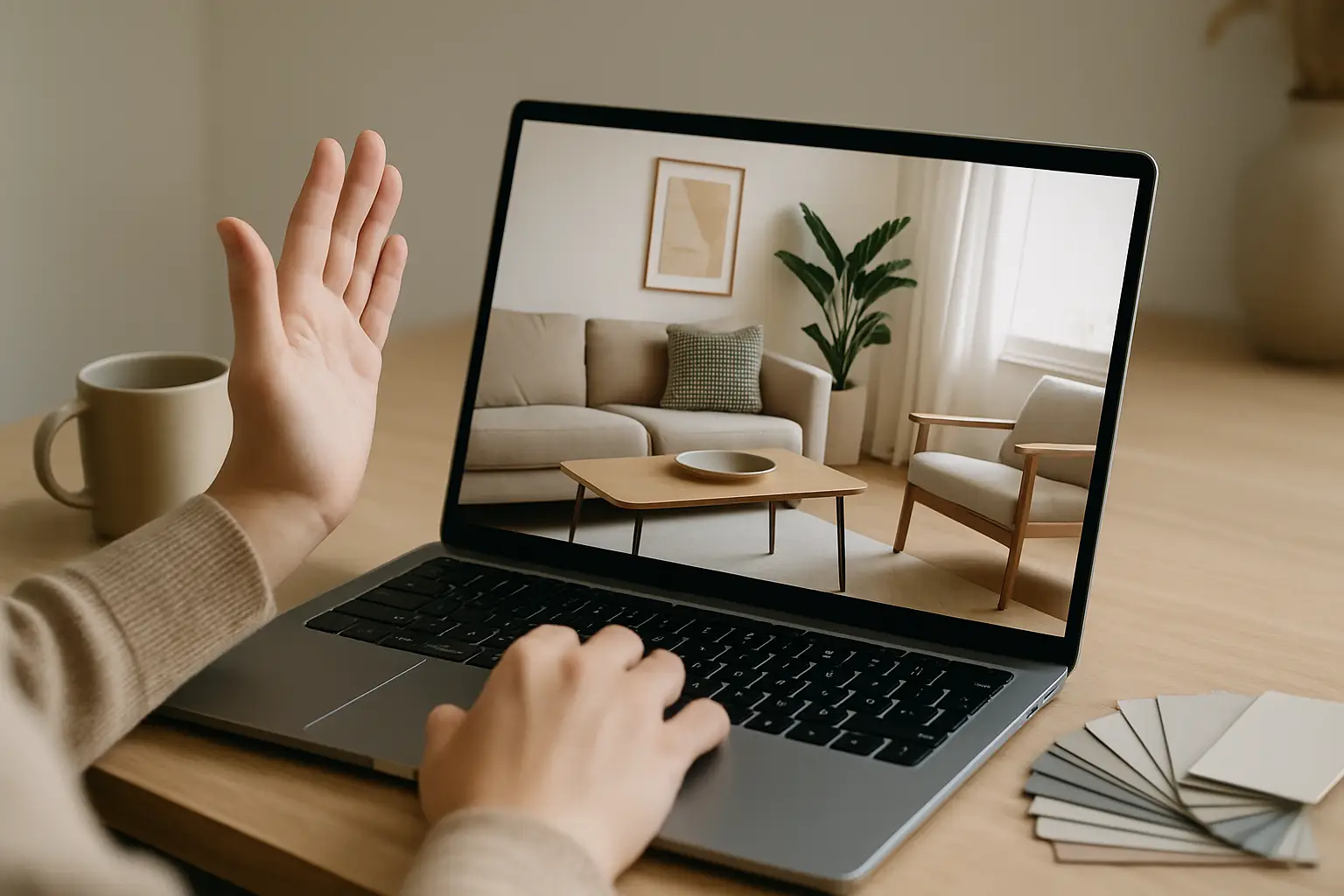
You know that moment when you walk into a room and think, “This could be so good”… but then you look around and realize you don’t know where to start? Maybe the sofa is fine but the layout feels off. Maybe the paint color looked perfect online and somehow reads like hospital beige in your actual light. Maybe you want the place to feel more “you,” but every decision feels expensive, permanent, and weirdly high-stakes.
Welcome to home design blog culture – the good kind. Not the kind that hands you a photo of a perfect house and a list of products you can’t pronounce. The kind that helps you make decisions in the real world: real budgets, real square footage, real schedules, real kids and pets and laundry piles.
This is a practical guide to using a home design blog the way designers use mood boards and floor plans – as a decision engine. If you’re a renter trying to elevate your space without losing your deposit, a homeowner planning upgrades one weekend at a time, or a DIY renovator trying to avoid costly mistakes, you’re in the right place.
Welcome to home design blog planning that actually works
A great home design blog isn’t just inspiration. It’s structure. It gives you a way to move from “I want it to feel better” to “Here’s the plan, here’s the order, and here’s what I’m doing next.”
The trick is to treat design like a series of small, reversible decisions before you commit to the big ones. Paint is technically reversible, but it doesn’t feel that way after you’ve taped trim for three hours. Flooring and tile feel permanent because they are. Furniture is expensive and awkward to return. So your goal is to create clarity before you spend.
Start by defining the room’s job. A living room can be a movie lounge, a conversation space, a toy-friendly family zone, or a hybrid of all three. A bedroom can be a calm retreat or a storage workhorse. A kitchen can be a daily meal machine or an entertaining hub. Your design choices should support that job first. Style comes next.
Then get specific about what isn’t working. “It feels cluttered” can mean you need closed storage, fewer small decor items, or simply better lighting. “It feels cold” might be color temperature, not color. “It feels dated” might be one or two elements that are dragging everything down, like old hardware or a builder-grade light fixture.
The fastest path: room-by-room, not whole-house
Whole-house projects are where motivation goes to die. The smartest home design blog readers go room-by-room and build momentum.
Pick one space that affects your day the most. For many people that’s the living room (you see it constantly), the bedroom (sleep quality), or the entryway (first impression and daily chaos). If you’re renovating, it might be the bathroom because small changes can deliver a big impact.
Once you choose the room, commit to a simple three-part plan: layout first, then lighting, then surfaces and decor. When you follow this order, you avoid the classic mistake of buying a rug or sectional that forces a bad layout.
Layout: make the room work before you make it pretty
Layout is your biggest lever, and it’s often free. Measure the room, note doors and windows, and sketch a basic floor plan. If you hate drawing, use a simple 3D home design app to test arrangements. The goal isn’t perfection – it’s avoiding obvious problems like blocking walkways or choosing furniture that overwhelms the space.
A helpful rule: protect the paths people naturally take. In a living room, you want clear routes from the entry to seating, and from seating to key spots like the kitchen or hallway. In a bedroom, you want at least one comfortable path around the bed and easy access to drawers.
It depends on your household, too. If you have kids, you may prioritize open floor space. If you work from home, you may need a desk that doesn’t look like an afterthought. A blog worth reading will show multiple layout options for different lifestyles, not a single “correct” arrangement.
Lighting: the easiest way to make any room feel expensive
Lighting is where homes quietly win or lose. The best rooms use layers: overhead light for general illumination, task light where you work, and accent light to add glow.
If your room feels harsh, it might be a cool bulb temperature rather than the fixture itself. If it feels gloomy, you might need more than one light source. If it feels flat, you probably need a lamp or two at eye level, not just a ceiling light.
Trade-off to know: trendy fixtures can date quickly, but good light quality never goes out of style. If you’re budget-conscious, upgrade bulbs and add floor lamps before you swap wiring-heavy fixtures.
Surfaces and decor: where style finally shows up
Once layout and lighting are handled, your style decisions get easier because you’re not trying to solve functional problems with decor.
A practical way to choose a look: pick one “anchor” you already own and like (a rug, a piece of art, a wood tone you want to keep) and build around it. Then choose a tight color palette. Most people don’t need more colors – they need fewer, repeated more intentionally.
Texture is your secret weapon, especially in neutral rooms. If you love white and beige, add interest with linen, boucle, wood grain, matte ceramics, and woven baskets. If you love color, use texture to keep it sophisticated rather than chaotic.
The categories that make decisions easier
Home design blogs work best when you use them like a library. You’re not “scrolling for vibes.” You’re searching with purpose.
Color: stop guessing, start testing
Paint is emotional. It’s also deceptively hard. The same color can look warm in one room and gray in another.
Use blogs to narrow down options, then test swatches in your own light. Look at the samples morning, afternoon, and at night with your lamps on. And pay attention to undertones. A “white” can read pink, blue, yellow, or green depending on what’s around it.
If you want one of the highest-impact, lowest-regret moves: focus on consistency. Repeating a white trim color and a coordinated wall palette across connected spaces makes your home feel more cohesive fast.
Furniture: buy fewer pieces, choose better proportions
Furniture mistakes are usually size mistakes. That “perfect” coffee table can be too high, too small, or too far from the seating to be usable.
A good blog will guide you toward proportions: how far a sofa should sit from a TV, how big a rug should be, and when to choose a round dining table instead of a rectangle. If you’re working with a small space, look for solutions like armless chairs, wall-mounted storage, and nesting tables.
It depends on your season of life. A glass coffee table might look amazing in a styled photo and feel like a daily stressor with toddlers. Performance fabric might not be glamorous, but it can save you money and sanity.
Bathrooms and kitchens: where upgrades should be strategic
These rooms get expensive quickly, so blog content is most valuable when it helps you prioritize.
If you’re remodeling, spend money where you touch and see things every day: faucets, drawer hardware, lighting, and the shower experience. You can often save on areas that don’t change function much, like basic tile in a simple layout, or choosing a standard vanity size instead of custom.
If you’re not remodeling, you can still get a real transformation through “swap-level” upgrades: a new mirror, modern sconces, a better shower curtain, updated cabinet pulls, and a fresh paint color. These are the changes that make a room feel cared for.
Space planning: the difference between “nice” and “effortless”
Space planning is the behind-the-scenes skill that makes a home feel calm.
In practice, it means giving items a home, choosing storage that fits your habits, and leaving some surfaces intentionally clear. Open shelving can look great, but it requires discipline. Closed storage is forgiving. The best choice depends on how you live, not what photographs well.
Trends without regret: how to use them wisely
Trends can be fun, and they can also waste money if you treat them like mandates.
Use trends as accents first. If you love a trending color, bring it in through pillows, art, or a throw. If you love a trending material, try it in a small zone like a tray, lamp base, or side table. If you still love it in six months, then consider committing with a larger piece.
When it makes sense to commit: if the trend aligns with your taste and the architecture of your home. A modern organic look can feel timeless in many spaces because it relies on natural materials and simple shapes. A highly specific pattern might feel dated faster. That doesn’t make it “wrong,” it just means you should decide knowingly.
Tech and AI: design faster, not colder
Modern home design is getting smarter, and that’s good news for DIYers. AI tools and 3D planners can help you visualize layouts, test color ideas, and create shopping lists.
The trade-off is that tech can push you toward generic results if you follow it blindly. Use tools to explore options and catch mistakes, then add your personality through meaningful pieces: art you actually like, books you’ll reread, travel objects, family photos in frames you’re proud of.
If you want a single workflow that keeps you moving: take photos, measure the room, create a quick layout in a planner, then build a mood board with three ingredients – your anchor piece, your palette, and your preferred materials. That’s enough structure to make confident purchases.
What to expect here, and how to get the most from it
A home design blog should feel like a capable friend who knows what matters and doesn’t waste your time. If you want a hub that organizes ideas by rooms, style, furniture, lighting, color, and planning – plus seasonal styling and forward-looking trend coverage – you’ll feel at home at Home Design United.
Here’s the mindset that makes blog content truly useful: don’t hunt for the “perfect” look. Hunt for the next right decision. Design isn’t one giant makeover. It’s a series of small improvements that add up to a home that supports your life.
Pick one room. Fix the layout. Improve the lighting. Edit the color palette. Add texture. Keep what works. Replace what doesn’t. Your home doesn’t need to look like a showroom to feel elevated – it just needs to feel intentional, comfortable, and unmistakably yours.
Your next step can be as small as moving a chair, swapping a bulb, or testing two paint samples in the corner where you drink your coffee. That’s how real homes get better – one choice at a time, with you in the driver’s seat.