







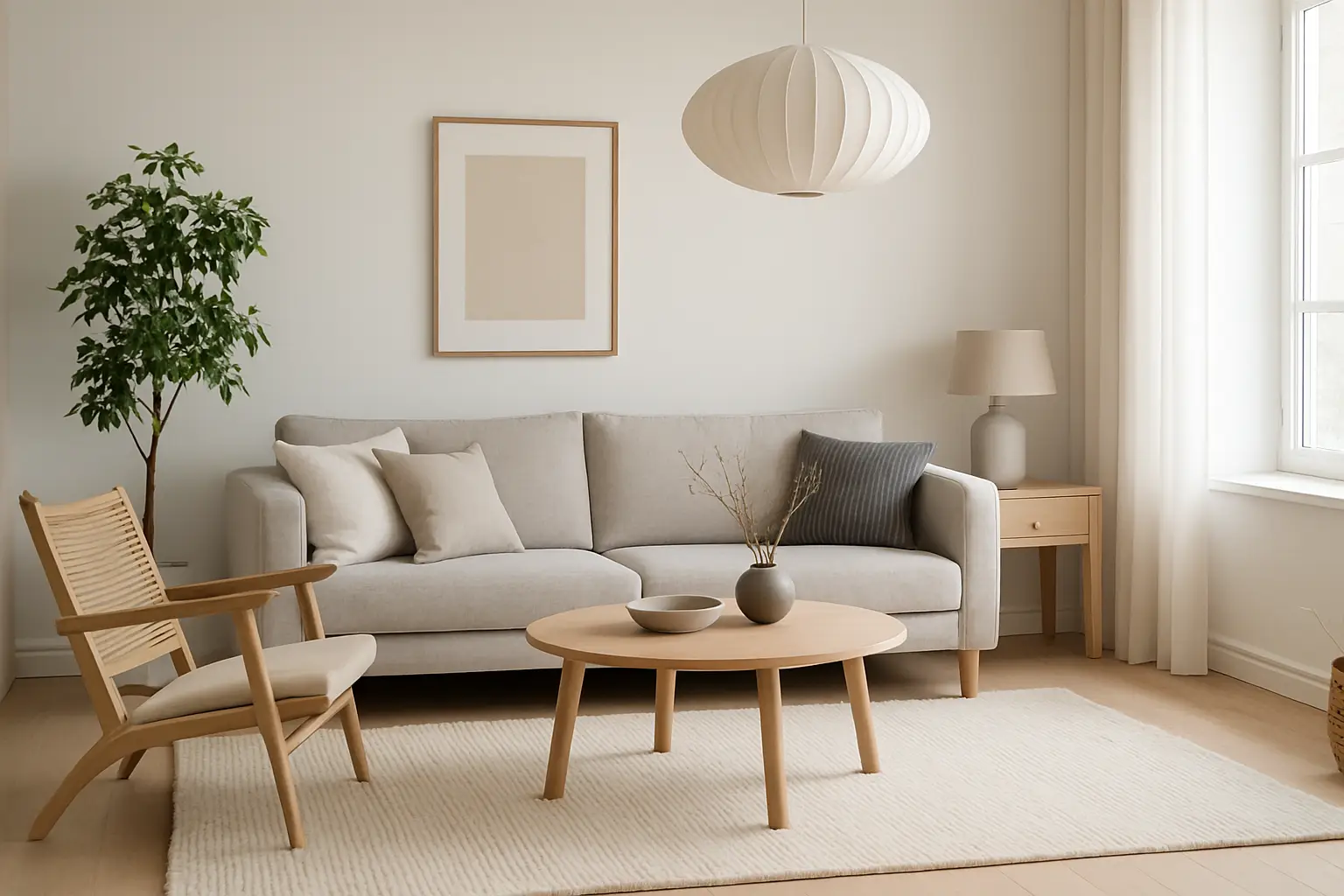
A Scandinavian living room isn’t “all white and empty.” The best ones feel calm, bright, and genuinely lived-in – like you can put your feet up without babysitting the space. If you’ve ever tried the look and ended up with a room that feels cold or flat, you don’t need more rules. You need better choices: the right whites, the right wood tones, lighting that does more than glare, and textures that keep the minimal vibe while adding warmth.
What Scandinavian style really prioritizes
Scandinavian interiors are rooted in function first, beauty as a close second. That means every item should earn its spot – either by being useful, comfortable, or emotionally grounding. Visually, the style leans light and uncluttered because it’s designed to support daily life, especially in places where daylight can be limited for long stretches.
The trade-off is real: the more minimal the room gets, the more obvious every decision becomes. A wrong rug size, a harsh bulb, or a sofa that’s slightly too bulky shows up fast. The upside is that once you get the foundation right, the room becomes easy to maintain and easy to update seasonally.
Scandinavian living room design tips: start with a “soft neutral” palette
Most people think Scandinavian equals pure white. In practice, the most inviting rooms use whites with warmth and depth, then layer quiet neutrals around them.
Aim for a base that’s light but not stark: warm white walls, soft greige, pale mushroom, or a very light taupe. If your living room gets a lot of warm afternoon sun, you can go slightly cooler (but still avoid icy blue-whites). If your room faces north or has little natural light, pick a creamy white or a beige-leaning greige to keep it from feeling chilly.
Then choose two supporting neutrals and stick to them. For example: warm white + light oak + soft gray textiles. Or greige + walnut accents + oatmeal linen. This is where the look starts to feel intentional instead of “I bought everything in beige.”
A simple rule that keeps it cohesive
If you’re mixing neutrals and it’s not working, check the undertones. Warm undertones want warm neighbors. Cool undertones want cool neighbors. When you mix without a plan, the room can look slightly “off,” even if every piece is beautiful on its own.
Choose wood tones that read natural, not orange
Wood is the warmth engine of Scandinavian style. The goal is “honest” material – pieces that look like wood, feel like wood, and aren’t fighting the room with a heavy stain.
Light oak, ash, birch, and beech are classic Scandinavian choices. You can absolutely use medium tones too, especially in US homes with existing floors, but avoid anything overly red or orange if you’re chasing that Nordic calm. If your floors are warmer (hello, honey oak), balance them with cooler textiles like soft gray, off-white, and charcoal – and keep metals simple.
When budget matters, prioritize the wood you touch and see most: coffee table, side table, media console top, and visible legs on upholstered furniture. A room can handle some lower-cost pieces when the key “anchor” items look authentic.
Let lighting do the heavy lifting (because it’s half the style)
Scandinavian living rooms almost never rely on a single overhead light. Layered lighting is what makes the space feel cozy instead of bare.
Start by thinking in zones: one light for general glow, one for reading, one for ambience. A floor lamp near the sofa, a table lamp on a side table, and a warm, diffused ceiling fixture can cover most rooms.
Keep bulbs warm. In most living rooms, 2700K is the sweet spot for that candle-adjacent warmth. If you prefer a brighter, cleaner feel, 3000K can work – but anything cooler can make neutral palettes look sterile.
If you want the modern upgrade that feels very “now,” add smart bulbs or smart dimmers. Being able to shift brightness at night is the quickest way to make a minimal room feel inviting. This is one of those improvements that reads expensive even when the fixture isn’t.
Build comfort with texture, not clutter
Minimal doesn’t mean flat. Scandinavian rooms feel layered because they use texture to add depth without adding visual noise.
Go for textiles that look natural and slightly imperfect: linen, cotton, wool, boucle, sheepskin (real or faux), and chunky knits. A room with a simple sofa and clean-lined tables can still feel warm if the throw feels plush, the rug has a soft pile, and the pillows aren’t all the same weave.
A good guideline is to mix at least three textures in your main seating area. For instance, a linen sofa, a wool rug, and a knit throw. Or a performance fabric sofa, a flatweave rug, and boucle pillows. It will still look Scandinavian – just more livable.
The “one cozy piece” trick
If your room keeps drifting too stark, add one intentionally cozy element that contrasts with the clean lines: a textured area rug, an oversized throw, or a lounge chair with a softer silhouette. One item can change the mood without changing the style.
Pick furniture that’s slim, functional, and easy to live with
The Scandinavian look is often about visual lightness. That doesn’t mean tiny furniture – it means pieces that don’t feel like they’re weighing the room down.
Look for sofas and chairs with raised legs, simple arms, and clean profiles. A low, blocky sectional can work, especially for families, but it should be balanced with lighter elements: a thinner coffee table, open shelving, or airy lighting. If you have kids or pets, you’re not “ruining” the aesthetic by choosing performance upholstery – you’re actually honoring the Scandinavian focus on everyday function.
If you’re furnishing from scratch, start with your seating comfort first, then scale everything else around it. A beautiful room that’s awkward to sit in is a fast path to buyer’s remorse.
Layout: create breathing room where it matters
Scandinavian living rooms feel calm because circulation is easy. You don’t have to own fewer things – you just need clearer pathways and fewer furniture collisions.
Start with your main walking routes: entry to sofa, sofa to kitchen, sofa to hallway. If you’re weaving around corners of furniture, the room will always feel cramped.
Then right-size the rug. In most living rooms, the front legs of your sofa and chairs should sit on the rug, or you go fully on-rug for a more grounded look. A too-small rug is one of the biggest reasons a minimalist room looks unfinished.
If your space is small, consider a round coffee table or nesting tables to soften the layout and make movement easier. If your space is open concept, anchor the living zone with the rug first, then float the sofa if needed to define the “room.”
Add contrast with black, but keep it intentional
A little black is a Scandinavian secret weapon. It sharpens the neutrals and gives the room structure.
Use it like punctuation: a black floor lamp, picture frames, cabinet pulls, or a thin black metal coffee table base. In a very light room, black prevents the space from feeling washed out. The key is restraint – too many black accents can push the room into industrial territory.
If black feels too harsh for your home, try charcoal, oil-rubbed bronze, or dark-stained wood for a softer contrast.
Keep decor minimal, but not impersonal
Scandinavian style is not anti-personality. It’s anti-clutter.
Choose a few decor pieces that carry the room rather than scattering dozens of small items. One large art piece over the sofa can feel more Scandinavian than a gallery wall packed with mismatched frames (unless the gallery is very cohesive). A ceramic vase, a sculptural bowl, and a stack of books can be plenty.
Plants fit naturally here because they add life without feeling busy. If you struggle with plant care, choose one easy, reliable option and let it be the “green moment” of the room.
When you’re styling shelves or a media console, leave some empty space on purpose. Negative space is part of the look, and it makes your favorite objects stand out.
Make it cozy in a very American way (without losing the vibe)
A lot of US homes have different realities than Scandinavian apartments: bigger TVs, open floor plans, more storage needs, and mixed architectural styles. You can still get the aesthetic by adapting it instead of copying it.
If you have a large TV, treat it as a design element. Mount it cleanly, run cords through the wall if possible, and choose a simple, low media console in a light wood. If your home has traditional trim, you don’t have to paint everything white to “match the rules.” Keep the trim, soften the wall color, and focus on modern furniture lines and layered lighting to bridge the gap.
If you want extra help visualizing the room before you buy anything, the planning tools and room-by-room guides at Home Design United can help you map out a layout and palette that fits your exact space.
Common mistakes that make Scandinavian rooms feel off
Most Scandinavian living rooms go sideways for predictable reasons. The fix is usually small, not a total redo.
If the room feels cold, it’s typically lighting temperature, lack of texture, or too many cool whites. Warm up the bulbs, add a wool rug or textured throw, and shift one major surface (like curtains or a sofa) to a warmer neutral.
If the room feels boring, it’s often a contrast problem. Add black accents, introduce one deeper tone (charcoal, forest green, or navy), or bring in a statement piece with shape – like a sculptural lamp or a curvy chair.
If it feels cluttered even with “minimal” decor, it’s usually visual noise from too many finishes. Reduce the mix: fewer metal tones, fewer wood tones, and a tighter color story.
The finishing touch: a room that supports your real routines
The most Scandinavian thing you can do is design around how you actually live. If you read every night, build a reading corner with a proper lamp and a side table that holds a mug. If movie nights are your thing, make the sofa comfortable enough for three hours and make the lighting dimmable. If your living room is also your work zone, add concealed storage so the room can reset quickly when the laptop closes.
Your living room doesn’t need to look like a catalog to feel Scandinavian. It just needs to feel bright, calm, and easy to come home to – and that’s a goal worth designing for.