







You know the feeling: you tidy the living room, step back, and it still looks busy. It is not always “too much stuff” – it is usually too many competing shapes, finishes, and small decor choices that never quite add up.
Minimalist decor fixes that, but only when it is built on the right essentials. Minimalism is not bare rooms and white walls by default. It is editing with intention so your home feels calmer, functions better, and still looks like you live there.
Below is a minimalist home decor essentials list you can actually use – whether you are furnishing a first apartment, reworking a family home, or prepping a property for better photos and showings.
What “minimalist essentials” really means
Minimalist spaces look simple because decisions are doing more work. Each piece earns its spot through function, proportion, and visual restraint.
Two trade-offs to be aware of: First, minimalism can feel cold if you skip texture and lighting. Second, it can get expensive if you insist on replacing everything at once with “perfect” pieces. The smartest approach is slower – keep what already works, then upgrade the few items that change the whole room.
Minimalist home decor essentials list (the pieces that carry the room)
You do not need all of these in every room. Think of them as a toolkit. Start with the categories that solve your biggest pain point: clutter, mismatched furniture, or a space that feels flat.
1) A tight, repeatable color palette
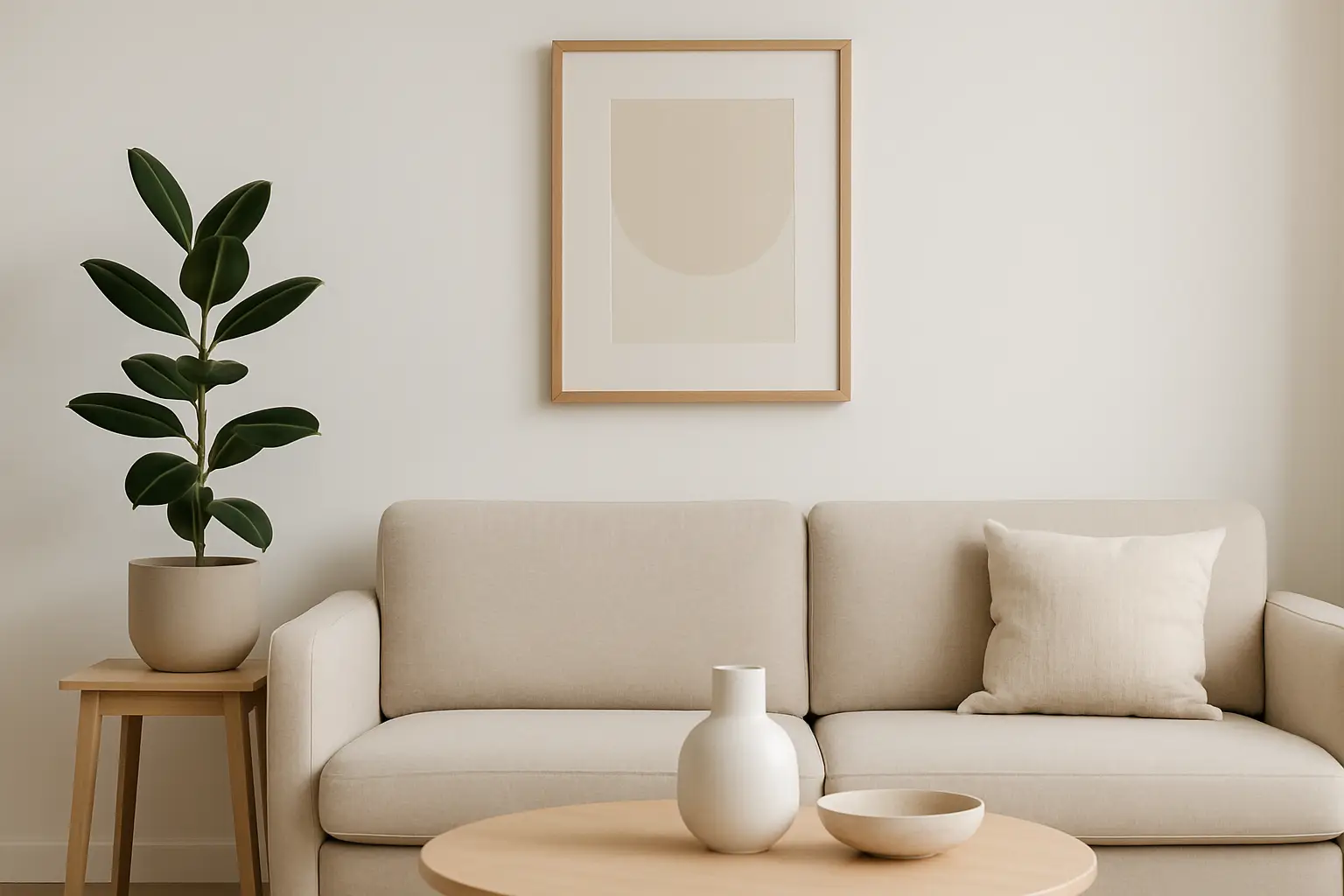
Minimalist homes usually rely on a controlled palette: warm whites, soft grays, greige, muted taupe, or gentle earth tones. The key is repetition. When wall color, textiles, and larger furniture live in the same family, your eye stops bouncing around.
If you love color, keep it concentrated. One signature color used in two or three places reads intentional. Ten small pops read noisy.
2) One “anchor” rug per zone
A rug is visual glue. In open-concept homes, minimalist design often works best when you treat the space as zones (living, dining, entry) and give each zone one rug that feels quiet and substantial.
Choose simple patterns (subtle stripes, tone-on-tone geometrics) or solids with texture. The wrong rug size is a common reason minimalist rooms feel off – too small makes furniture look like it is floating and adds visual jitter.
3) A sofa with clean lines and durable upholstery
The sofa is not the place for fussy silhouettes if you want a minimalist look. Favor straight arms, a low to medium profile, and upholstery that holds up. In real homes with kids, pets, or frequent guests, performance fabric or tightly woven textiles are worth it.
Minimalist does not mean uncomfortable. It means the shape is calm, and the comfort comes from thoughtful cushions and supportive construction.
4) A simple coffee table with presence
In minimalist living rooms, the coffee table acts like a centerpiece. Go for one strong table instead of several small accent tables competing for attention.
Wood adds warmth, stone adds weight, and metal adds crispness. The “right” choice depends on your flooring and other large finishes. If you already have wood floors and a wood media console, a stone or metal table might create better balance.
5) Layered lighting (not just a ceiling fixture)
Minimalism is often misread as bright overhead lighting and nothing else. The opposite looks better. Layering is what makes a pared-back room feel designed.
Aim for a mix: an overhead fixture for general light, a floor lamp for height, and at least one table lamp for warmth. Bulb temperature matters – soft white typically feels more relaxed than daylight bulbs, especially in rooms with neutral palettes.
6) Window treatments that go quiet
Minimalist windows are clean, but not necessarily bare. Simple linen panels, woven shades, or streamlined roller shades keep lines calm.
If privacy is a concern, pair shades with drapery panels. Panels can soften a room and make ceilings look taller when hung high and wide. The minimalist move is choosing one treatment style and repeating it throughout a level of the home.
7) One large piece of art (or a disciplined pair)
Minimalist walls work when you stop trying to “fill” them. A single oversized print or painting can carry a room better than a cluster of small frames.
If you prefer a pair, keep them matched in size and framing. Black, natural wood, or thin metal frames typically read clean. The art can be personal and bold – minimalism is about editing, not erasing personality.
8) A mirror that does double duty
A well-placed mirror is both decor and a practical tool for light. In small spaces, it can make a room feel larger. In dark spaces, it can bounce light from a window or lamp.
Minimalist mirrors usually have simple shapes: round, rectangle, or gently arched. Skip heavy ornamentation unless it is the one intentional “statement curve” in an otherwise clean room.
9) Closed storage that hides the “small stuff”
Clutter is often just visible micro-items: chargers, mail, pet gear, toys, extra candles, remotes. Minimalist rooms look calm because those items have a home behind a door or inside a drawer.
Look for credenzas, sideboards, media consoles, and nightstands with real storage capacity. Open shelving can still work, but it requires discipline. If you know you prefer low-maintenance, choose closed storage first.
10) A tray or bowl to create one intentional catchall
Minimalist styling is less about having nothing and more about containing what you have. A tray on the coffee table, a bowl on the console, or a small dish in the entry turns everyday items into a composed moment.
The trick is size. If the tray is too small, items spill out and look messy. If it is generously sized, it reads like a design choice.
11) Textiles with texture, not pattern overload
When your palette is calm, texture becomes the personality: chunky knits, linen, bouclé, wool, cotton canvas. Minimalist spaces feel inviting when you can see and sense material variation.
Use patterns sparingly. If your rug is textured, keep pillows mostly solid. If you choose one patterned pillow, repeat its colors elsewhere so it feels connected.
12) A plant (or branches) for organic shape
Greenery breaks up straight lines and adds life without visual clutter. One tall plant can replace three small decor objects.
If you travel often or have low light, consider hardy options or even a simple vase with branches. Minimalism is forgiving when your “nature moment” is sculptural and contained.
13) Minimal hardware and cohesive finishes
You can have a minimalist home with mixed metals, but it should look purposeful. A simple approach is choosing one dominant finish (matte black, brushed nickel, aged brass) and repeating it across the room or floor.
Hardware is a high-impact, cost-conscious upgrade in kitchens, bathrooms, and built-ins. Just be realistic: if your home has a lot of existing finishes you cannot change, aim for coordination rather than perfect matching.
14) Negative space (yes, it is an “essential”)
Negative space is the breathing room around objects. It is what makes a single lamp look elegant and a single vase feel like art.
If your surfaces are full, remove half, then reassess. Minimalist rooms often look finished sooner because the “design” is partly the empty space you protect.
15) A simple system for daily resets
This is the least glamorous essential and the one that makes minimalism stick. You need a repeatable routine: five minutes to clear the coffee table, put chargers away, fold throws, and corral mail.
Design can help. If you build in a charging drawer, an entry drop zone, or a cabinet for kid clutter, your home stays calmer with less effort. If you want more planning help across rooms and categories, Home Design United is built for exactly that kind of practical decision-making.
How to use this essentials list room by room
Minimalism works best when each room has a clear job.
In the living room, prioritize the sofa, rug, coffee table, and layered lighting. Those four choices set the tone. Then add one large art piece and one plant, and stop. If it still feels sparse, add texture with a throw and two pillows instead of more objects.
In the bedroom, the essentials are bedding with texture, nightstands with closed storage, and lighting that is not purely overhead. A calm bedroom is mostly about reducing visual noise near the bed. Matching lamps are optional; matching scale is more important.
In the dining area, choose one strong overhead fixture and keep the tabletop mostly clear. A single bowl, a low centerpiece, or nothing at all can look more elevated than constant seasonal decor.
In entries and hallways, the win is function. A mirror, a closed shoe solution, and one tray for keys beats a bench piled with bags. If you have kids, build the drop zone around their routines, not your ideal Pinterest entry.
Common minimalist mistakes (and how to avoid them)
The biggest mistake is buying a lot of small “minimal” decor pieces. Ten neutral vases still look like clutter. Fewer, larger items with weight and texture read more intentional.
Another is ignoring comfort. Minimalist rooms that feel sterile are usually missing warm lighting, soft textiles, or natural materials. If your space feels cold, do not add more objects – adjust bulbs, add linen drapery, or bring in a wool rug.
Finally, be careful with matching everything too perfectly. A home can look like a showroom if every piece is the same style and finish. Minimalism still needs a little contrast: a curved mirror with a rectangular console, a warm wood table with cooler upholstery, a modern lamp next to a vintage bowl.
A calmer home is not a finish line you cross after one big shopping trip. It is a series of smart, repeatable choices – fewer, better pieces; contained surfaces; and lighting and texture that make the space feel like you. Keep one corner of one room as your “calm standard,” and let the rest of the house catch up to it over time.