







That sofa you like is probably fine.
What usually makes it look unfinished (or oddly flat) is the pillow situation: the wrong sizes, a color that fights the rug, inserts that slump by noon, or a pattern mix that feels accidental. The good news is you don’t need a designer budget to get that layered, pulled-together look. You just need a simple decision order and a few guardrails.
Below is a practical, room-by-room way to think about how to choose throw pillows so they look intentional, feel comfortable, and hold up to real life.
Start with the job: comfort, style, or both?
Before you pick a color, decide what the pillows are supposed to do. If your living room is where you actually lounge, prioritize softness and back support. If it’s a more “company-ready” space, you can lean more decorative and structured.
Most homes need a mix. One or two pillows should be genuinely comfortable to lean on (a slightly larger size, softer fabric, a forgiving insert). The others can do the visual heavy lifting with bolder patterns, trims, or a more tailored shape.
This is also where you set the tone for maintenance. White boucle looks amazing, but if you have kids or pets, you may want that texture in a deeper color or a removable, washable cover.
How to choose throw pillows by size (so they don’t look dinky)
Size is the fastest way to make pillows look high-end. Too small and they read like an afterthought. Too large and your sofa turns into a pillow pit.
For most standard sofas, 22-inch square pillows are the sweet spot for the back corners. If your sofa is petite or apartment-sized, 20-inch squares can look cleaner. Oversized or deep-seat sofas often look best with 24-inch squares, but only if you have the depth to support them.
On beds, scale up. A king bed can handle larger Euro shams (typically 26-inch squares) at the back, with smaller layers in front. A queen bed still benefits from Euro shams, but you can keep the front layer tighter so it doesn’t swallow the mattress.
For accent chairs, 18- to 20-inch squares work well, or a small lumbar pillow if the chair has a curved back.
One detail that makes a big difference: use inserts that are 2 inches larger than the cover (a 22-inch insert in a 20-inch cover, for example). That’s how you get that full, “chop” look without needing more pillows.
Pick a color plan that connects to the room (not just the couch)
A common mistake is choosing pillows that match the sofa perfectly. Matching can look flat, especially on neutral sofas, because everything blends into one block.
Instead, pull colors from what already has visual authority in the room: the rug, curtains, art, or even a favorite vase. You’re looking for connection, not duplication.
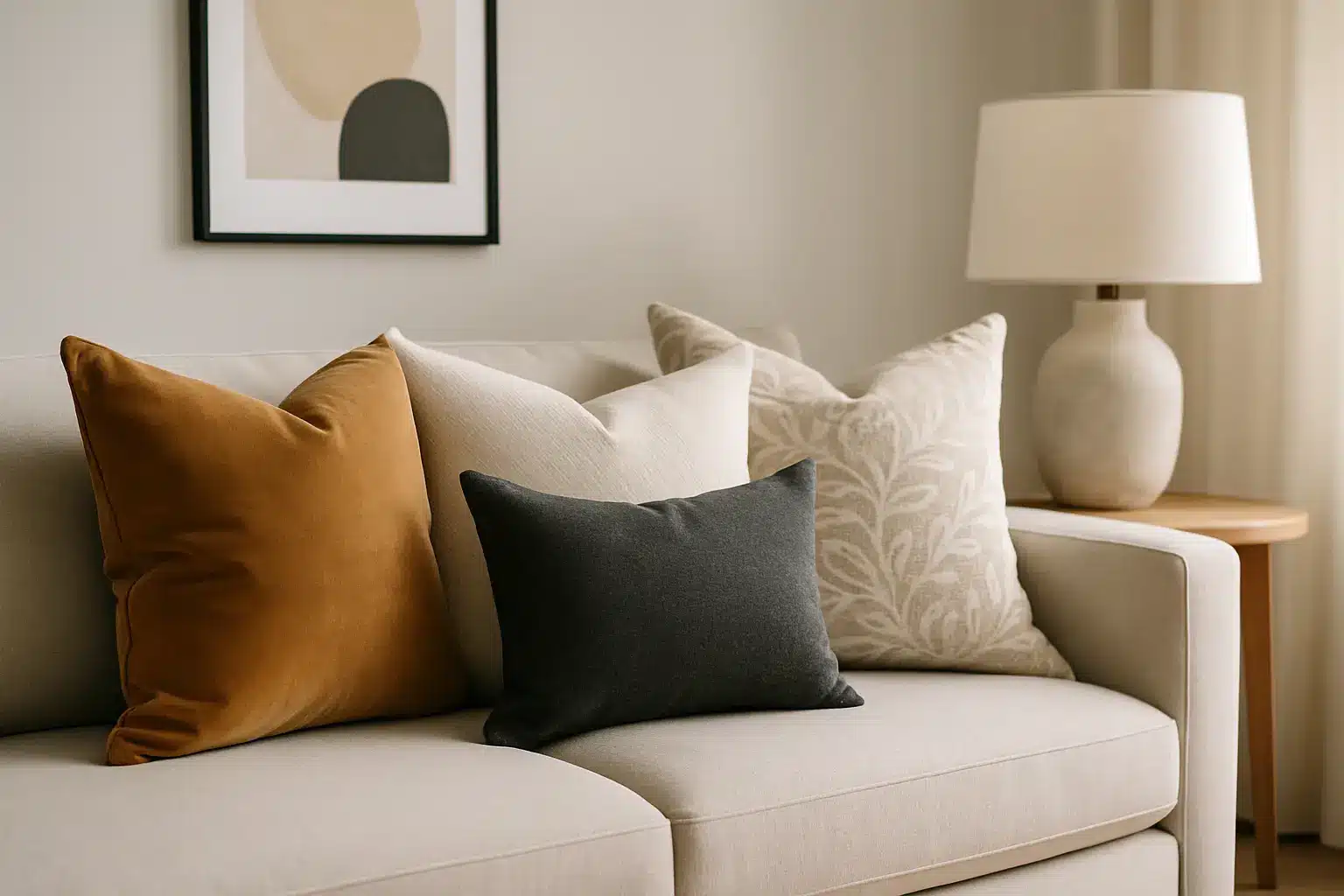
A reliable approach is to build around three color roles. You want a base that relates to the sofa (cream on beige, charcoal on gray), a supporting color that ties to something else in the room (a rug color or wall art), and one accent that adds energy (rust, olive, cobalt, or a warm metallic tone). If your room already has a lot happening, keep the accent quieter and let texture do the work.
If you’re working with an open-concept space, repeat at least one pillow color elsewhere (a kitchen towel, a candle, a small piece of art) so the color feels “placed,” not random.
Mix textures first, then patterns
Texture is the cheat code for cozy, elevated rooms – especially if you like neutrals. Even with a simple palette, texture creates depth and makes the arrangement feel styled.
If your sofa is smooth (leather, tight weave), bring in something nubby or soft like bouclé, chenille, or a chunky knit. If your sofa is already textured (linen, tweed), add contrast with something sleeker like velvet or a tighter woven cotton.
Once texture is working, patterns become easier.
An easy pattern rule that rarely fails
Try mixing patterns by scale: one larger-scale pattern, one medium, and one small or subtle (like a stripe or tiny geometric). Keep at least one color consistent across all of them so they feel related.
If pattern mixing makes you nervous, start with one patterned pillow and keep the rest solid but textured. You’ll still get that designer look, just with less risk.
Watch the “theme” trap
Pillows that are too literal can date a room fast (think big seasonal phrases or overly specific motifs). If you want seasonal styling, do it through color and texture: deep greens and velvets for winter, linen and soft blues for summer. You get the vibe without committing your sofa to a holiday.
Decide on a finish: crisp and tailored or relaxed and cozy
The pillow edge detail matters more than most people expect. It changes the entire mood.
Knife-edge pillows (no border) feel modern and clean, but they can look limp if the insert isn’t full. Flanged edges (a fabric border) feel casual and airy. Piping reads more tailored and traditional, and it’s great if you want a polished look.
If your room style is modern farmhouse, coastal, or Scandinavian, relaxed edges and natural fabrics fit beautifully. If you’re leaning transitional, traditional, or contemporary glam, piping, velvet, and more structure can elevate the space.
Build a layout that fits the furniture (and real life)
You don’t need a strict formula, but you do need a layout that makes sense for the piece.
On a standard sofa, two pillows on each end looks balanced and keeps the center usable. If you like a fuller look, add a lumbar pillow in the middle, but make sure people can still sit comfortably.
On a sectional, let the corner drive the layout. That inside corner is where pillows either look amazing or look like clutter. Use one larger pillow and one lumbar in the corner, then keep the outer ends simpler.
On a bed, think in layers from biggest to smallest. The back row can be sleeping pillows or Euro shams, then add a smaller decorative layer, then a lumbar across the front if you want a finished look without adding too many pieces.
If you live in the space (kids, pets, movie nights), fewer, better pillows often wins. The room still looks styled, and you’re not constantly relocating pillows to the floor.
Don’t skimp on inserts (this is where “expensive” comes from)
A gorgeous cover with a sad insert will always look off. Inserts are the hidden upgrade that makes the whole setup feel intentional.
Down or down-alternative inserts tend to look the most luxurious because they’re full but moldable. Foam inserts can look more structured and are sometimes better for people who want firmer back support. If allergies are a concern, down-alternative is usually a solid compromise.
Also pay attention to fill level. A slightly overstuffed insert looks crisp and keeps corners from collapsing.
Think about performance if you’re styling a real home
If your home is busy, choose fabrics that are forgiving. Tighter weaves hide wear better than delicate loops. Medium tones and heathered fabrics camouflage everyday life better than stark solids.
Removable covers with hidden zippers are your friend. You can swap covers seasonally, clean them, and refresh a room without buying new inserts every time.
If you want light-colored pillows in a high-traffic home, consider using them as the “top layer” that can be moved easily, while the base pillows stay in durable mid-tone fabrics.
Room-by-room: quick guidance that keeps you from overthinking
Living room sofas
Anchor with two larger squares that relate to the sofa, then bring in one patterned pillow and one texture-forward pillow. If your rug is bold, keep pillow patterns subtle and let the rug be the star. If your rug is neutral, pillows can carry more personality.
Beds
Choose pillows that support the bedding, not compete with it. If your duvet is patterned, go mostly solid on pillows with texture. If your duvet is solid, add one pattern layer to create interest. One lumbar pillow is often enough to make the bed look styled without stacking five pieces every morning.
Accent chairs and reading corners
Use one pillow that adds contrast and comfort, then echo that color elsewhere in the corner (a throw blanket, a small art piece). This keeps a single chair from looking like it’s borrowing a pillow from another room.
A simple way to “test” before you buy
If you’re stuck between options, take a quick photo of your sofa and rug in natural daylight and look at it in black-and-white. If everything becomes the same gray tone, your pillows need more contrast in value (lighter lights, darker darks). If the contrast is already strong, focus on texture and keep the palette calmer.
You can also use a quick mockup approach: screenshot your room photo and place small color swatches over it to see if the palette feels warm, cool, or mixed in an awkward way. If you like tech-assisted planning, this is the kind of practical workflow we share at Home Design United.
The most common throw pillow mistakes (and how to avoid them)
Buying all pillows the same size is the big one – it reads like a set. Mixing sizes creates depth. Another common issue is choosing pillows that are all pattern or all solid; you want a balance so the eye has places to rest. And finally, too many pillows can backfire. If you have to move half of them to sit down, edit.
Your best pillow setup is the one that matches your life. Choose covers you actually want to touch, colors that make the room feel like you, and inserts that hold their shape. When your pillows look good and work hard, the whole space feels more finished – and you’ll notice it every time you walk in.