








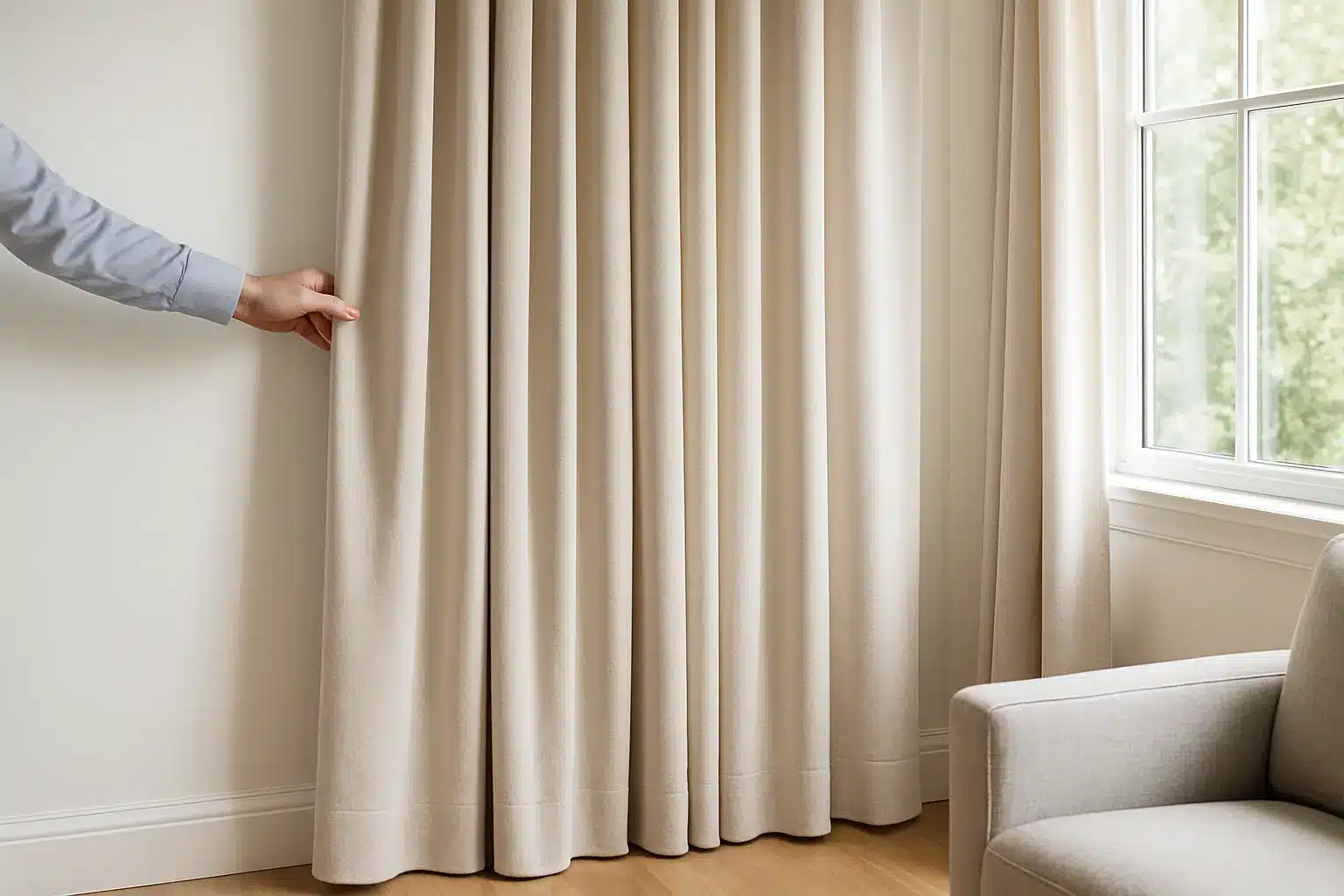
You can spend hours picking the perfect curtain fabric, then lose the whole effect with a hem that lands in the wrong place. Too short reads “temporary.” Too long can look sloppy (or become a pet hair magnet). The good news: curtain length is one of those design decisions with clear rules – and a few smart exceptions – that instantly make a room feel more finished.
Below are practical, real-life curtains length rules you can follow in any home, whether you rent, DIY, or you’re mid-renovation and trying to get the details right.
The 5 curtain lengths (and when each wins)
Curtain length isn’t just “short” or “long.” It’s a specific landing point relative to the window, the wall, and the floor. Once you know the standard options, choosing becomes much easier.
1) Sill length: ends at the window sill
Sill-length curtains stop right at (or barely kiss) the window sill. They’re functional in tight spots – think kitchens, breakfast nooks, or any window that sits above a radiator cover or built-in surface.
Trade-off: sill length can look casual. If the rest of the room leans tailored or elevated, sill-length panels can feel a little light visually. The fix is usually better fabric (linen-look, textured weave) and a rod mounted higher and wider so the window still feels “framed.”
2) Apron length: ends 2-4 inches below the sill
Apron length is the underrated workhorse. It’s long enough to feel intentional, but short enough to stay clear of furniture like a desk, kitchen counter edge, or low console.
Trade-off: apron length can chop the wall height if the rod is mounted too low. If you go apron, commit to a higher rod placement to keep the vertical line flattering.
3) Floor length: ends 1/2 inch above the floor
If you want a clean, tailored look, floor length is the default “designer” choice. The panels hover just above the floor, so they hang straight and don’t collect dust.
This is the best fit for high-traffic rooms and households with kids or pets. It’s also the safest choice if you’re investing in custom drapery or higher-end panels.
4) Breaking length: just touches the floor (a slight break)
This is the most forgiving “perfect” length for off-the-shelf curtains. Instead of hovering, the hem makes light contact with the floor – think the way trousers can have a tiny break at the shoe.
It reads relaxed but still polished, and it helps hide slightly uneven floors (which are more common than most people think).
5) Puddle length: extends 1-6+ inches onto the floor
Puddling is intentionally dramatic. It can look gorgeous in low-traffic bedrooms or formal spaces where curtains are mainly decorative.
Trade-off: puddles collect dust and can look messy fast. If you love the romance but want less maintenance, choose a “micro-puddle” of about 1 inch rather than a deep puddle.
Curtains length rules for measuring (the part that prevents regret)
Most curtain mistakes come from measuring the window instead of measuring the hang. The curtain doesn’t live at the glass – it lives at the rod.
Start with the rod placement, not the window
A common rule is to mount the rod 4-6 inches above the window frame. But the more impactful guideline is this: place the rod high enough to make the window feel taller, and wide enough so the panels can stack mostly off the glass when open.
In many rooms, that means mounting closer to the ceiling line (especially in standard 8-foot rooms), as long as it still looks balanced. If you’re doing this, measure from the top of the rod (or the ring eye, if using rings) down to your target hem point.
Decide how the curtain will attach
A grommet panel hangs differently than a back-tab panel, and rings with clips change the drop too. Before you order, confirm whether your measurement should start at:
- The rod top (for some pocket styles)
- The ring eye (for rings)
- The clip (for clip rings, which can add about 1 inch of length variability)
This is why two homes can buy “96-inch curtains” and get totally different results.
Account for real-world floors
Even in newer homes, floors can slope slightly, and trim can vary. If you’re going floor length, measure in three spots – left, center, right – and use the longest measurement if you want the panels to avoid looking accidentally short.
If you want a crisp hover (1/2 inch above the floor), you may need to hem panels individually or accept a slight break for a more forgiving finish.
How long should curtains be in each room?
Room function matters. The same puddle that looks dreamy in a primary bedroom can be a daily annoyance in a family room.
Living room
Floor length or a slight break is your best bet. It gives you the “finished” look people associate with a well-designed space, and it pairs well with everything from modern minimalist to modern farmhouse.
If you have baseboard heaters, floor length can still work, but keep the fabric from resting directly over a heat source and choose materials that won’t trap heat. When in doubt, consult your heater’s clearance recommendations.
Bedroom
Bedrooms can handle more softness. Floor length is clean and calming, while a 1-inch micro-puddle adds a luxe, boutique-hotel feel.
If you’re adding blackout lining, keep in mind lined curtains hang straighter and may look slightly shorter once the fabric settles. Hanging them for a few days before hemming can save you from an “oops” moment.
Kitchen
Sill or apron length usually wins because it avoids splashes and keeps fabric away from work zones. If your kitchen window is far from the sink and you want a more elevated look, a tailored apron length can feel surprisingly high-end.
Bathroom
Most bathrooms do best with shades or blinds, but if you’re using curtains for privacy on a window (not the shower), keep them short enough to stay clear of moisture. Sill length is typical.
Dining room
Floor length elevates a dining space quickly, especially if the windows are a focal point. If a buffet or bar cart sits under the window, apron length can be a practical compromise.
The “rules” that matter most visually
If you only remember a few curtains length rules, make them these.
Rule 1: Longer almost always looks more custom
Between a panel that’s 2 inches too short and one that lightly breaks on the floor, the slight break will look intentional. Short reads like you bought the wrong size.
Rule 2: The rod height affects length more than people think
A higher rod makes the room feel taller, but it also demands longer panels. If you’re moving the rod up, don’t assume your old curtains will still work. This is where many people end up with the “flood pants” effect.
Rule 3: Hem consistency is the difference between polished and chaotic
If you have multiple windows in one room, aim for the same finished length across all of them. Even if one window is slightly different, consistent hems help the room read as cohesive.
Rule 4: Let function overrule drama in busy spaces
Puddling in a hallway-adjacent living room looks great in photos and gets stepped on in real life. If you want your home to feel elevated and easy to live in, choose floor length or a slight break for the spaces you use most.
Common curtain length mistakes (and easy fixes)
The most common mistake is buying curtains based on the window height. The fix is simple: measure from where the curtain will hang.
The next most common issue is choosing panels that are technically long enough, but hanging them too low and too narrow. Even perfect length can look “off” if the panels cover the window instead of framing it.
If your panels are slightly short, you have options that don’t require starting over. Clip rings can add a little length, and a simple fabric border or band at the bottom can look like a custom detail while giving you the extra inch or two you need.
If your panels are too long, hemming tape works for a fast upgrade, but a sewn hem drapes better over time, especially with heavier fabrics.
A quick decision flow that keeps you confident
If you’re stuck, decide in this order: function first (traffic, pets, heaters, moisture), then style (tailored vs relaxed), then installation (rod height and hardware), then exact hem (hover, break, puddle). It’s the same process we use when turning inspiration photos into real-life rooms, and it keeps you from falling in love with a look that doesn’t fit how you live.
If you’re planning multiple updates at once – paint, layout, window treatments – it can help to map the whole room before you buy. Resources like Home Design United are built for that kind of step-by-step planning, so your curtain choice supports the bigger vision instead of feeling like a separate decision.
The goal isn’t to follow a rulebook perfectly. It’s to pick a length that makes your windows feel intentional, your ceilings feel taller, and your daily routine feel easier – because the best-looking rooms are the ones that also work.