







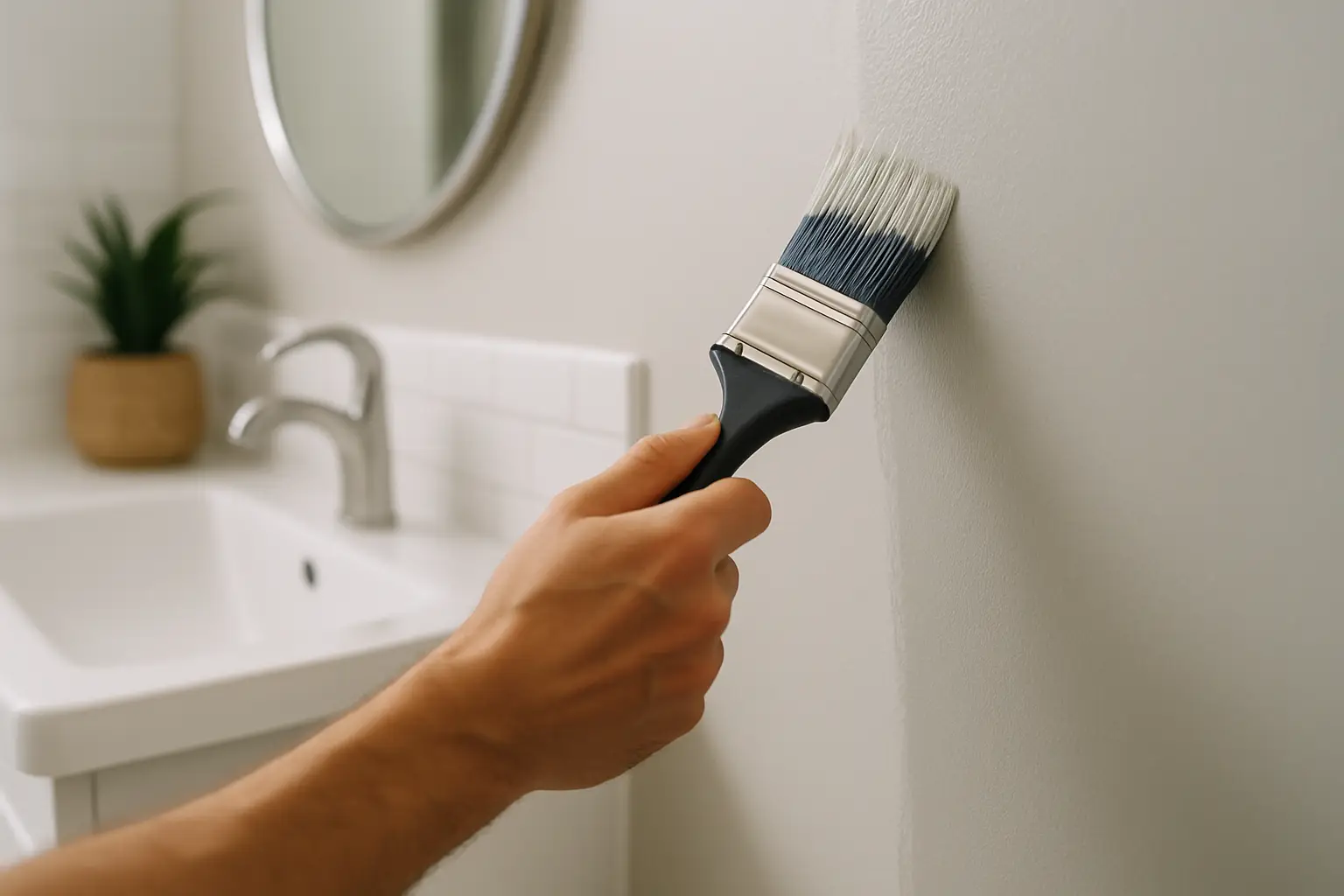
A bathroom can look freshly renovated at 9 a.m. and feel like a steam room by 9:20. That swing – from dry to damp to wiped-down-to-clean – is exactly why paint finish matters more here than almost anywhere else. The right sheen makes your color look intentional, resists moisture, and cleans up without going patchy. The wrong one highlights every drywall ripple and starts to look tired fast.
The best paint finish for bathroom walls (most homes)
For most US bathrooms, the best paint finish for bathroom walls is satin. It lands in the sweet spot: noticeably more washable and moisture-tolerant than eggshell or matte, but less reflective than semi-gloss, so it won’t spotlight every seam, nail pop, or skim-coat wave when the vanity light hits.
Satin is also forgiving for DIYers. It levels reasonably well, it’s easier to touch up than higher-gloss finishes, and it holds up to routine cleaning – think toothpaste specks, handprints near the light switch, and the occasional hair dye splash – without demanding constant babying.
That said, “best” depends on your bathroom’s reality: how much ventilation you have, how often you shower, whether kids use the space, and whether the walls are smooth enough to handle shine.
Bathroom paint finishes, explained in plain English
Paint sheen is basically a sliding scale of light reflection and resin content. More sheen generally means more durability and scrub resistance, but it also means more glare and more visible surface flaws.
Matte and flat: beautiful, but picky in bathrooms
Flat and matte finishes are great at hiding imperfections. If your walls are older or the drywall finish is less-than-perfect, matte can make the room feel softer and more high-end.
The trade-off is cleanability and moisture tolerance. Many modern “washable matte” paints perform better than older formulas, but bathrooms still stress paint. If your ventilation is weak or you take long, hot showers, matte can start to show water marks or burnish (shiny spots from rubbing) where you clean most.
Eggshell: the low-sheen compromise
Eggshell is just a step up in sheen. It’s often used in living rooms and bedrooms because it’s subtle and still fairly washable.
In a powder room or a bathroom that doesn’t see daily steamy showers, eggshell can work nicely, especially if you want a calmer, less reflective look. In a high-use full bath, it’s more likely to show wear around sinks and towel hooks.
Satin: the workhorse finish for bathrooms
Satin is the finish most homeowners wish they’d chosen from the start. It handles humidity, wipes clean without drama, and still looks “designer” in normal lighting.
If you’re repainting a family bathroom, a rental unit, or any space where cleaning happens weekly (or daily), satin is usually the smartest choice for walls.
Semi-gloss: best for trim, sometimes too shiny for walls
Semi-gloss is durable and moisture-resistant, which is why it’s commonly used on bathroom trim, doors, and cabinets.
On walls, semi-gloss can absolutely work – especially in a small bath where you want maximum wipeability – but it’s less forgiving. If your wall texture is uneven, semi-gloss will advertise it. It can also create glare under bright vanity lights, which some people interpret as “cheap” even when the paint is high quality.
High-gloss: dramatic and least forgiving
High-gloss is bold, reflective, and tough. It’s also the finish that shows everything: roller marks, patches, dents, and even slight differences in wall absorption.
High-gloss is best kept for statement moments (like a vanity or a furniture-style cabinet) or for specific design looks where shine is the point.
Where each finish belongs in a bathroom
Most bathrooms look best – and last longest – when you mix finishes intentionally.
Walls: satin first, then eggshell or semi-gloss as needed
Choose satin for the majority of bathrooms. If the bathroom is rarely used (guest bath) and you want a softer look, eggshell is a reasonable upgrade from matte. If the bathroom is heavily used and the walls are in excellent shape, semi-gloss can be a durability play, but it’s a commitment.
Ceiling: flat if it’s dry, otherwise use a moisture-friendly finish
If your bathroom has a strong exhaust fan and you don’t routinely get condensation on the ceiling, a flat ceiling paint is fine and helps hide imperfections.
If your ceiling regularly fogs up, consider a paint formulated for humid spaces and use a low-sheen finish (often matte or satin depending on the product line). A slightly higher sheen on ceilings in steamy bathrooms can reduce moisture staining, but it may show roller overlap if applied unevenly.
Trim and doors: semi-gloss for easy cleaning
Baseboards, window trim, door casings, and doors do well in semi-gloss. It resists scuffs from laundry baskets, cleans easily, and provides a crisp contrast that makes the room feel finished.
Cabinets and vanity: satin or semi-gloss depending on the look
For painted vanities, satin gives a modern, furniture-like finish without screaming “shine.” Semi-gloss is tougher and a little more traditional. Either can work – the bigger factor is using a cabinet-appropriate paint system (bonding primer plus a durable topcoat if required by the product).
The factors that actually decide the right sheen
Instead of guessing, make the choice based on four real-world conditions.
1) Ventilation: your fan matters more than your paint
A great paint finish can’t fully compensate for chronic humidity. If your exhaust fan is undersized, rarely used, or venting incorrectly, even the best paint will struggle long term.
If you have consistent condensation on mirrors and walls, go with satin at minimum for walls and make sure the fan runs during showers and for at least 20 minutes after. If you’re renovating, upgrading ventilation is one of the most cost-effective “invisible” improvements you can make.
2) Wall condition: sheen reveals what prep hides
Higher sheen equals higher visibility of flaws. If your walls have patches, old wallpaper scars, or uneven texture, satin will look better than semi-gloss. If the walls are truly smooth (or you’re willing to skim coat and sand), you can consider more sheen for extra durability.
3) Lighting: bright vanity lights amplify shine
Many bathrooms have direct, high-Kelvin lighting that throws glare onto walls. Under that lighting, semi-gloss can feel harsh and reflective. Satin usually reads as clean and fresh without turning your walls into a light bouncer.
4) Cleaning style: gentle wipe-down or serious scrubbing
If you want to scrub hard, you’ll appreciate satin or semi-gloss. If you prefer gentle cleaning and want a soft, spa-like look, eggshell or a high-performing washable matte may satisfy you – as long as your bathroom stays relatively dry.
A quick word on “bathroom paint” vs finish
You’ll see paints marketed specifically for kitchens and baths. Those formulas often include mildewcides and higher resin content to resist moisture. That’s helpful, but it doesn’t cancel out the finish decision.
Think of it like this: product line affects the paint’s toughness and mildew resistance; finish affects how it looks and how it handles wiping and reflection. For most homeowners, pairing a bathroom-rated paint with a satin finish is the simplest way to get durability without a shiny, flaw-revealing surface.
Mistakes that make bathroom paint fail early
The finish matters, but failure is usually a system problem.
First is painting over soap residue or humid grime. Bathrooms collect invisible film from hairspray, body wash, and cleaning products. Wash the walls with a degreasing cleaner and rinse well, especially around the vanity and toilet.
Second is skipping primer where it counts. If you’re painting over repairs, stained areas, glossy old paint, or any surface that’s been scrubbed a lot, a bonding or stain-blocking primer helps the finish coat look even and adhere correctly.
Third is painting too soon after showering or cleaning. Humidity trapped in drywall and corners slows curing and can lead to poor adhesion. Paint when the room is dry, run the fan, and give the coating time to cure before heavy cleaning.
Practical picks by bathroom type
If you want a simple decision you can act on today, match the finish to the room’s use.
A powder room can be eggshell or satin. You’re optimizing for looks and light, not steam.
A daily-use full bath is usually best with satin walls, semi-gloss trim, and a ceiling choice based on whether you see condensation.
A kid’s bathroom or a rental leans toward satin walls and semi-gloss trim for maximum wipeability, because the paint will get tested.
A poorly ventilated bathroom is where satin is the minimum, and your real “upgrade” is improving airflow. If you’re planning the refresh, this is the moment to treat the fan like a design feature – quiet, effective ventilation makes every finish perform better.
If you’re building a cohesive plan for paint, lighting, and the overall bathroom look, you can find more step-by-step design guidance at Home Design United.
Closing thought
Pick the sheen that matches how your bathroom actually behaves on a normal weekday, not how it looks right after you clean it. When the finish is right, you stop thinking about paint – and the whole room feels easier to live in.