







You know the exact moment your floor becomes “high-traffic”: the hallway turns into a runway, the kitchen becomes the family’s meeting point, and the entryway collects every bit of weather your city can throw at it. The right flooring doesn’t just survive that daily wear – it keeps your home looking pulled together without making you tiptoe around your own space.
This guide breaks down the best flooring for high traffic areas based on what actually matters in real homes: scratch resistance, dent resistance, water tolerance, easy cleanup, comfort underfoot, and how good it looks after year two (not day two). You’ll see clear trade-offs, because the “best” choice depends on who lives in your home, how you use the space, and how much maintenance you’re willing to do.
What “high-traffic” really means (and why floors fail)
High traffic is rarely just about footsteps. Floors usually fail because of a specific combination: grit (tiny sandpaper particles), rolling loads (strollers, desk chairs, carts), moisture (wet boots, pet bowls, mopping), and impact (dropped pans, dog nails, kids’ toys). If you choose a material that’s strong in only one category, the weak spot shows up fast.
Before you pick a product, think through your real-life stressors. A condo with two adults and no shoes indoors can handle a different floor than a busy household with kids, dogs, and a backyard. And “traffic” in an upstairs hallway is different from “traffic” in a kitchen where spills and chair movement are constant.
Best flooring for high traffic areas: top options, explained
There are five main categories that consistently perform well. The right one depends on how you balance durability, water resistance, comfort, and style.
Luxury vinyl plank (LVP) and luxury vinyl tile (LVT)
If you want the most forgiving, real-life-friendly choice for most homes, LVP/LVT is tough to beat. It’s comfortable underfoot, resists scratches better than many natural materials, and most quality lines are genuinely water resistant (many are waterproof at the plank level).
Where LVP shines is day-to-day living: muddy shoes at the door, a spilled cup in the kitchen, pets running laps, and quick cleanups with a damp mop. It also comes in convincing wood and stone looks that work with modern farmhouse, coastal, minimalist, or transitional interiors.
The trade-off is that not all LVP is created equal. Thicker wear layers generally hold up better to scuffs and long-term dulling, but the bigger “make or break” factor is proper installation and a flat subfloor. In sun-soaked rooms, some vinyl can fade or shift slightly over time, so window treatments and choosing a quality product matter.
Best for: kitchens, family rooms, finished basements, rentals, busy hallways.
Porcelain tile (and some ceramic tile)
Porcelain tile is the “built for life” option for high traffic. It handles grit, water, and heavy wear extremely well, and it’s ideal when you need true moisture protection. For entryways and mudrooms, tile is hard to beat because it’s basically unfazed by wet boots, salt, and frequent mopping.
The trade-offs are comfort and drop impact. Tile is hard and can feel cold, especially in winter climates. If you drop glassware in a tiled kitchen, it’s usually game over for the glass. Grout is also the maintenance variable: even stain-resistant grout benefits from sealing and smart cleaning habits.
If you’re choosing tile for a high-traffic area, pay attention to slip resistance. A beautiful polished tile can be slick when wet, which is the opposite of what you want near an entry or laundry room.
Best for: entryways, mudrooms, bathrooms, laundry rooms, kitchens (especially in spill-prone homes).
Engineered hardwood (the “real wood” compromise)
If you love the warmth and value of wood but you also live in your home like a normal person, engineered hardwood is often a better high-traffic choice than solid hardwood. It’s constructed in layers, which makes it more dimensionally stable, so it handles everyday humidity changes better than solid planks.
It still has a real wood wear layer on top, which means it looks and feels premium and can suit everything from classic to Scandinavian to contemporary. In high-traffic settings, you’ll want a finish that hides micro-scratches (matte and satin are your friends) and you’ll need to commit to basic protection habits like felt pads under chairs.
The trade-off is water. Engineered wood is more stable than solid, but it’s not a “spill it and forget it” floor. A wet mess needs to be wiped up. It’s also not the best fit for a basement or an entry that routinely gets drenched.
Best for: living rooms, dining rooms, upstairs hallways, open-concept main floors where you want real wood.
Laminate (the new generation)
Laminate has improved dramatically. Many newer laminates have better surface durability, more realistic visuals, and stronger edge treatments than older versions. In high-traffic households, laminate can be an excellent value when you want a wood look and strong scratch resistance.
The key is understanding laminate’s weak point: water at the seams. Some products offer improved water resistance, but laminate generally performs best in dry-to-normal conditions. If your “high traffic” is mostly kids running through the hallway and not constant wet boots, laminate can be a smart, budget-conscious choice.
Another trade-off is sound and feel. Laminate can sound a bit “clicky” in echo-prone spaces unless you use a quality underlayment and consider area rugs where appropriate.
Best for: hallways, living areas, home offices, rentals where you want strong durability at a lower cost.
Carpet tile (yes, for the right spaces)
High traffic doesn’t always mean “hard surface.” In certain areas – especially stairs, playrooms, and some home offices – carpet tile can be a practical, design-forward solution. The big advantage is modular replacement: if one section gets stained or worn, you swap a tile instead of redoing the whole room.
Carpet tile has a more tailored, modern look than traditional wall-to-wall carpet, and it can make a space quieter and more comfortable. It’s also a strong option for basements when you want warmth and sound control.
The trade-off is that it’s still carpet. If you have pets prone to accidents or you’re placing it near an entry, you’ll need a plan for quick cleaning and moisture control.
Best for: stairs, playrooms, home offices, basements where you want softness and easy repairs.
How to choose the right material for each high-traffic zone
If you’re updating multiple spaces, you don’t have to force one flooring type everywhere. A smart plan matches the floor to the stress.
Entryway and mudroom
This is where grit and moisture do the most damage. Porcelain tile is the most resilient, while LVP is the most forgiving and comfortable. If you want the look of wood, choose a textured LVP that hides debris and provides better traction.
Kitchen
Kitchens are high traffic plus high spill. LVP is a top pick for most households because it’s softer underfoot during long cooking sessions and handles everyday messes well. Tile is excellent for maximum water resistance, but consider anti-fatigue mats and slip-resistant finishes.
Hallways and stairs
Hallways need scratch resistance and visual longevity because they show wear quickly. Laminate and LVP both perform well here. For stairs, many homeowners choose carpet tile (or a stair runner) for grip and noise control, especially in homes with kids or older adults.
Living and family rooms
If you want a warm, elevated feel, engineered hardwood can be worth it, especially if you choose a durable finish and add rugs in heavy-use paths. For family rooms with pets and frequent snack time, LVP often looks “new” longer with less stress.
Home office
Rolling desk chairs are brutal on soft wood and some finishes. LVP, laminate, and low-pile carpet tile tend to handle office wear best. If you love hardwood, plan on a quality chair mat and felt protection.
The performance details that matter when you shop
Product labels can feel like a different language. These are the details that typically separate a floor that looks good long-term from one that starts annoying you.
With LVP, focus on the wear layer and the core. A thicker wear layer generally resists scuffs better, while a rigid core can help with minor subfloor imperfections. With tile, think in terms of durability and traction: a matte or lightly textured porcelain often performs better in real homes than a glossy finish.
With engineered hardwood, the finish and species matter. Harder species can dent less, but the finish choice affects how scratches show. With laminate, pay attention to edge swelling resistance and the quality of the locking system – it impacts how well seams stay tight under traffic.
Design moves that make high-traffic flooring look better longer
Even the best floor benefits from a few smart design decisions. A slightly varied tone or natural-looking pattern hides everyday dust and tiny scuffs better than a perfectly uniform surface. Mid-tone woods and greiges are popular for a reason: they’re forgiving.
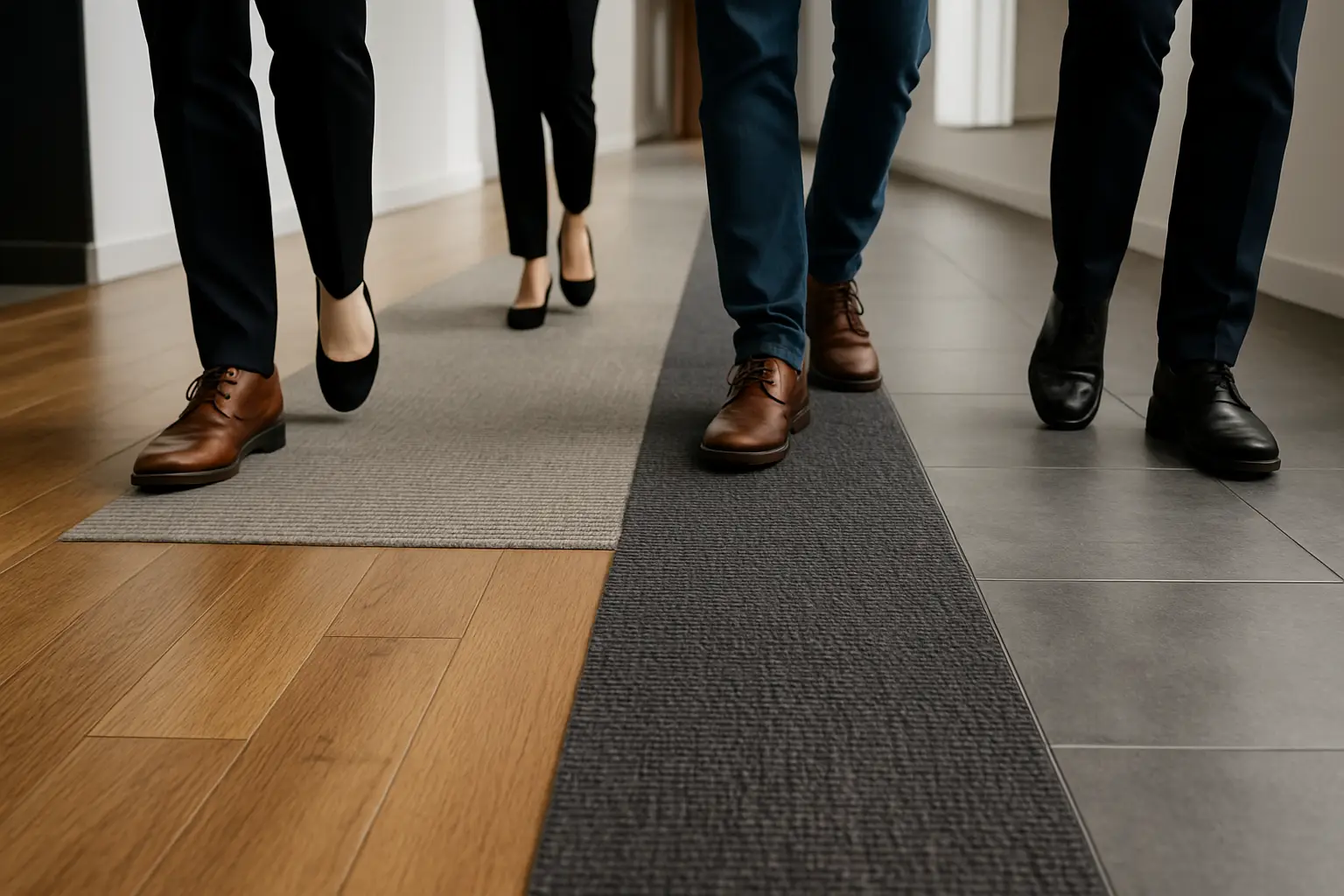
Think about transitions, too. If you’re mixing materials (like tile in the entry and LVP in the main area), choose tones that relate to each other so the change feels intentional. This is where planning tools and visual mockups can save you from costly “almost right” choices. Homeowners who like to plan visually often build a quick mood board or simple layout before buying – exactly the kind of practical workflow you’ll find throughout Home Design United.
A realistic decision framework (so you don’t overthink it)
If your top priority is water and grit resistance, tile or quality LVP usually wins. If your priority is warmth and a premium feel, engineered hardwood is often the sweet spot as long as you’re realistic about spills. If your goal is the best durability per dollar for dry areas, laminate is back on the shortlist. And if comfort, quiet, and easy patch repairs matter most, carpet tile is a surprisingly capable option.
The best choice is the one that matches your habits, not your fantasy routine. Pick the floor that lets you live normally, keep it looking great with basic maintenance, and still feel like your home is elevated – not fragile.
Closing thought: when you choose flooring for high-traffic areas, you’re not just buying a surface – you’re buying how relaxed you get to feel in your own space every single day.