







The moment you realize you hate painting is usually mid-project: tape peeling, “one coat” turning into three, and that slightly-off shade staring back at you under night lighting. The good news: you can get the same focal-point payoff of an accent wall with less mess, more texture, and options you can reverse if you rent.
Below are accent wall ideas without paint that actually hold up in real homes – including what they cost in effort, what they’re best for, and where people get tripped up.
First, pick the job your accent wall needs to do
An accent wall isn’t just “the pretty wall.” It’s usually doing one of three things: anchoring furniture (so the sofa or bed feels placed), adding depth (so the room feels bigger or warmer), or creating a moment (so your eye has somewhere to land).
If you’re working with an open-plan space, an accent wall often replaces the need for extra room dividers. In a small bedroom, it can make the bed look intentional even if you kept the nightstands simple. In a rental, it’s a chance to personalize without risking your security deposit.
Once you decide what you want the wall to do, choosing the right material gets a lot easier.
1) Peel-and-stick wallpaper for instant pattern
If you want the fastest “wow,” peel-and-stick wallpaper is hard to beat. It’s ideal for bedrooms, powder rooms, and offices where you want pattern without committing long-term.
The trade-off is prep. Even though it’s “temporary,” it looks best on smooth, clean walls. Heavily textured drywall can cause lifting at seams, and humid bathrooms can shorten its life unless you choose a product rated for moisture. Use a level, work slowly, and plan your panel layout so your focal area (behind the bed or sofa) doesn’t land on an awkward seam.
2) Removable wall murals when you want a single statement
A mural reads more custom than repeating wallpaper and can make a basic room feel designed. Think landscape scenes behind a bed, oversized botanicals in a dining area, or abstract color fields in a modern living room.
Murals are less forgiving than wallpaper because there’s usually one “right” alignment. Measure twice, order the correct size, and start with the most visible center section. If you’re styling for resale, murals can be polarizing – choose calmer imagery and neutral tones for broader appeal.
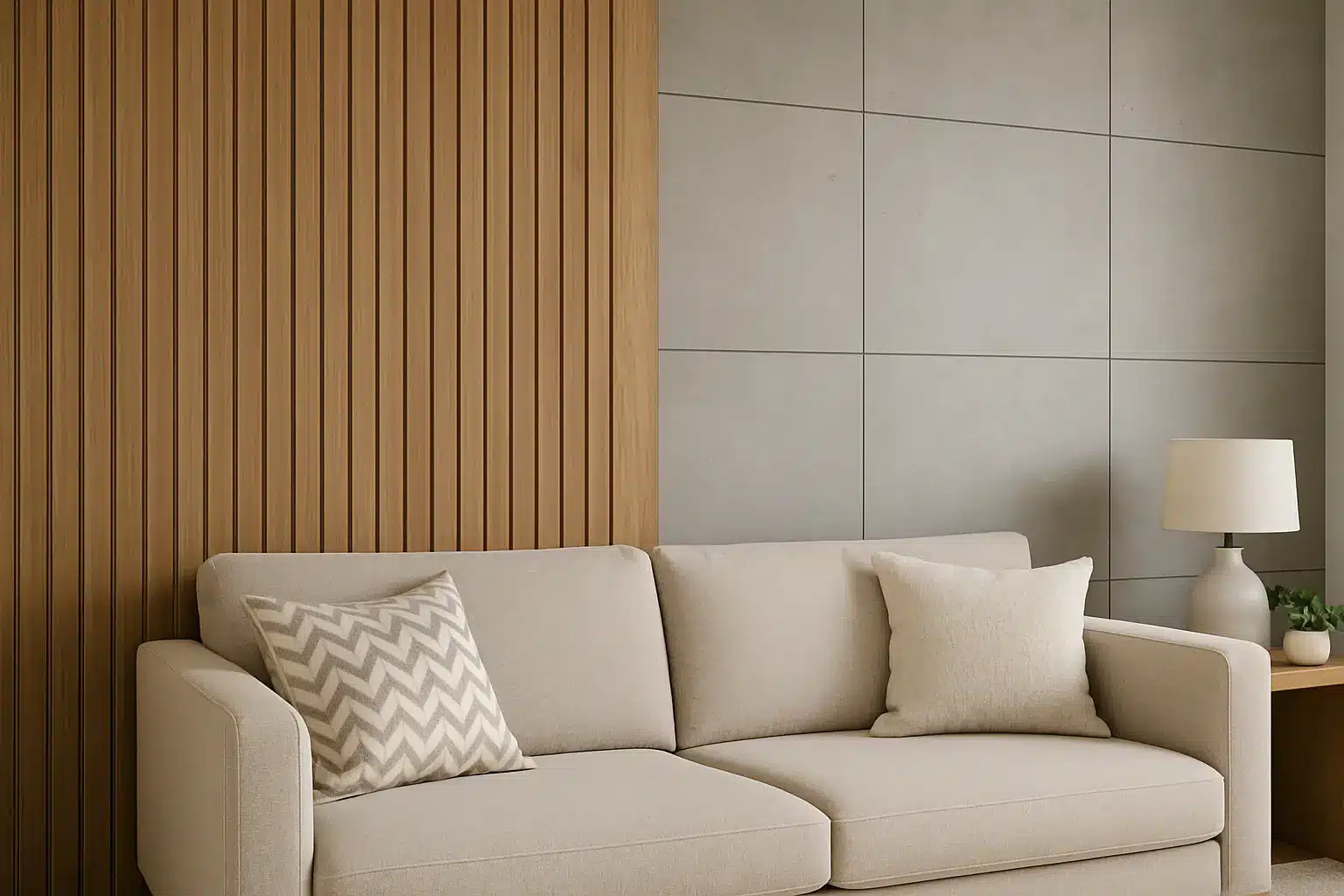
3) Wood slat panels for modern texture (and better acoustics)
Vertical slat walls are having a moment for good reason: they add warmth, rhythm, and a high-end feel. They’re especially strong behind a TV, in an entry, or as a headboard wall.
You can install slat panels with construction adhesive and a few finish nails, but be honest about your wall condition. Uneven drywall can telegraph through. Also consider outlets and switches – you’ll either cut around them or extend them outward with an electrical box extender. The bonus: wood texture can soften echo in large rooms, which is a practical win, not just a visual one.
4) Board-and-batten or picture-frame molding for quiet luxury
Trimwork is one of the most convincing “upgrade” moves because it changes the architecture, not just the surface. Board-and-batten or picture-frame molding looks great in dining rooms, stair landings, hallways, and bedrooms.
This is an accent wall idea without paint that still looks finished if you keep it the same wall color as the room. You’re leaning on shadow lines and depth instead of color contrast. The main trade-off is time: you’ll measure, cut, fill nail holes, and caulk. If you’re a beginner, start with a simple grid pattern and wider spacing – it’s more forgiving.
5) Peel-and-stick tile for kitchens, bars, and bathrooms
Peel-and-stick tile has improved a lot. Used as an accent wall behind a coffee bar, in a laundry nook, or as a backsplash-to-ceiling statement, it reads clean and intentional.
Heat and moisture matter. Near a range, choose a product rated for higher temperatures and consider adding a real heat shield behind it. In bathrooms, prioritize strong adhesion and good ventilation. Also, take your time aligning the first row – small errors multiply quickly.
6) Stone veneer or faux brick panels for grounded, cozy character
If you want instant “architectural story,” faux brick or stone veneer gives you that loft or cottage vibe. It’s a strong choice for fireplaces, reading corners, and basement family rooms where you want warmth.
The trade-off is visual weight. In a small room, a heavy texture can feel busy, so keep the rest of the surfaces simple. If you’re installing panels, plan your seams so they land behind furniture or along natural breaks. And if you have forced-air vents or tight door clearances, check thickness so nothing interferes.
7) Fabric walls for softness and hotel energy
Fabric on a wall is an underrated move, especially behind a bed. You can stretch linen or velvet over thin panels (or even use a curtain track system) to create a padded, tailored look.
Fabric absorbs light and sound, which is great for bedrooms and media rooms. The downside is maintenance: lighter fabrics can show marks, and you’ll want a lint roller for pet hair. If allergies are a concern, choose tighter weaves and avoid heavy textures that trap dust.
8) Floor-to-ceiling curtains as a dramatic “wall”
Curtains aren’t just for windows. Hanging panels across an entire wall can create a luxe backdrop, hide awkward surfaces, and make ceilings look taller.
This works especially well in rentals because you can mount a ceiling track with minimal patching later. It’s also practical if you’re covering closet doors you hate or creating a soft divider in a studio. The trade-off is floor space: curtains need a little room to hang and stack, so don’t use this where furniture must sit flush to the wall.
9) A gallery wall with one unifying rule
A gallery wall is the most flexible accent wall because you can build it over time. The key is to pick one unifying rule: consistent frame color, consistent mat size, or a tight color palette in the artwork.
If you want it to feel curated (not chaotic), plan the layout on the floor first, then trace paper templates on the wall. Use picture-hanging strips if you rent. For a calmer look, mix a few larger pieces with smaller ones instead of using all the same size.
10) Oversized art for a clean, designer focal point
One big piece can do the job of an entire accent wall with almost no installation stress. It’s perfect for minimalist homes, small spaces, or anyone who wants impact without visual clutter.
The trick is scale. In living rooms, your art should feel anchored to the sofa – generally wider than the center cushions, not floating in the middle of nowhere. If you’re budget-conscious, consider a large canvas print or textile wall hanging. The trade-off is personality: one piece sets the tone, so choose something you won’t tire of quickly.
11) Lighting as an accent wall (yes, really)
If you’ve ever seen a wall washed in soft, angled light, you already know lighting can be the accent. Wall sconces flanking a bed, a picture light over art, or LED strip lighting behind a slat wall can turn a plain surface into a feature.
This approach is especially smart when you don’t want more “stuff” on the wall, just better atmosphere. The trade-off is planning: hardwired sconces look best but require electrical work. Plug-in versions are renter-friendly and still elevate the room if you hide the cords neatly.
12) A functional accent wall with shelves or built-ins
An accent wall that also stores things is the most satisfying kind of upgrade. Think floating shelves in a kitchen, a book wall in an office, or a media wall that hides cables.
The design win is depth and purpose. The risk is clutter. If you’re adding shelving, plan what you’ll actually display and leave negative space on purpose. Closed storage on the bottom with open shelves above is a solid balance for family homes.
13) Large-scale decals or geometric vinyl for a crisp graphic look
When you want pattern but don’t want to wrestle full wallpaper panels, decals and geometric vinyl shapes are a great middle ground. They’re also ideal for kids’ rooms, playrooms, and temporary styling.
This is one of the most forgiving accent wall ideas without paint because you can step back, adjust spacing, and build the design gradually. The trade-off is finish: cheaper decals can look shiny or peel at corners over time. Stick with matte options and apply them to clean, fully cured walls.
How to choose the right idea for your room
If your room already has strong furniture and you just need a backdrop, go simpler: slat panels, molding, curtains, or one oversized art piece. If your space feels flat and you want energy, wallpaper or a mural brings instant movement.
Also consider your timeline. If you need the room done this weekend, decals, peel-and-stick wallpaper, curtains, or a gallery wall are realistic. If you can give it a few evenings, trimwork or slat panels deliver the most “built-in” payoff.
And if you’re planning with tools first (highly recommended), sketch the wall and your furniture placement before buying materials. Even a quick mockup helps you avoid the common mistake of placing the accent where it won’t be seen. If you want more room-by-room planning ideas like this, you can browse inspiration and tutorials at Home Design United.
Common mistakes that make accent walls feel off
The most common problem is choosing the wrong wall. The best accent wall is usually the one you see first when you enter, or the one your main furniture sits against. Accent walls on random side walls often look like an afterthought.
Second is scale. Tiny patterns on a huge wall can feel busy, while an oversized mural in a cramped room can feel overwhelming. If you’re unsure, pick a medium-scale pattern and keep the rest of the room quieter.
Third is forgetting lighting. Texture and pattern look different in daytime versus lamp light. Before you commit, test a sample where your room lighting actually hits it at night.
Your home doesn’t need another chore to look better. Pick one wall, choose one material that fits your lifestyle, and let the upgrade do its job quietly every time you walk into the room.