







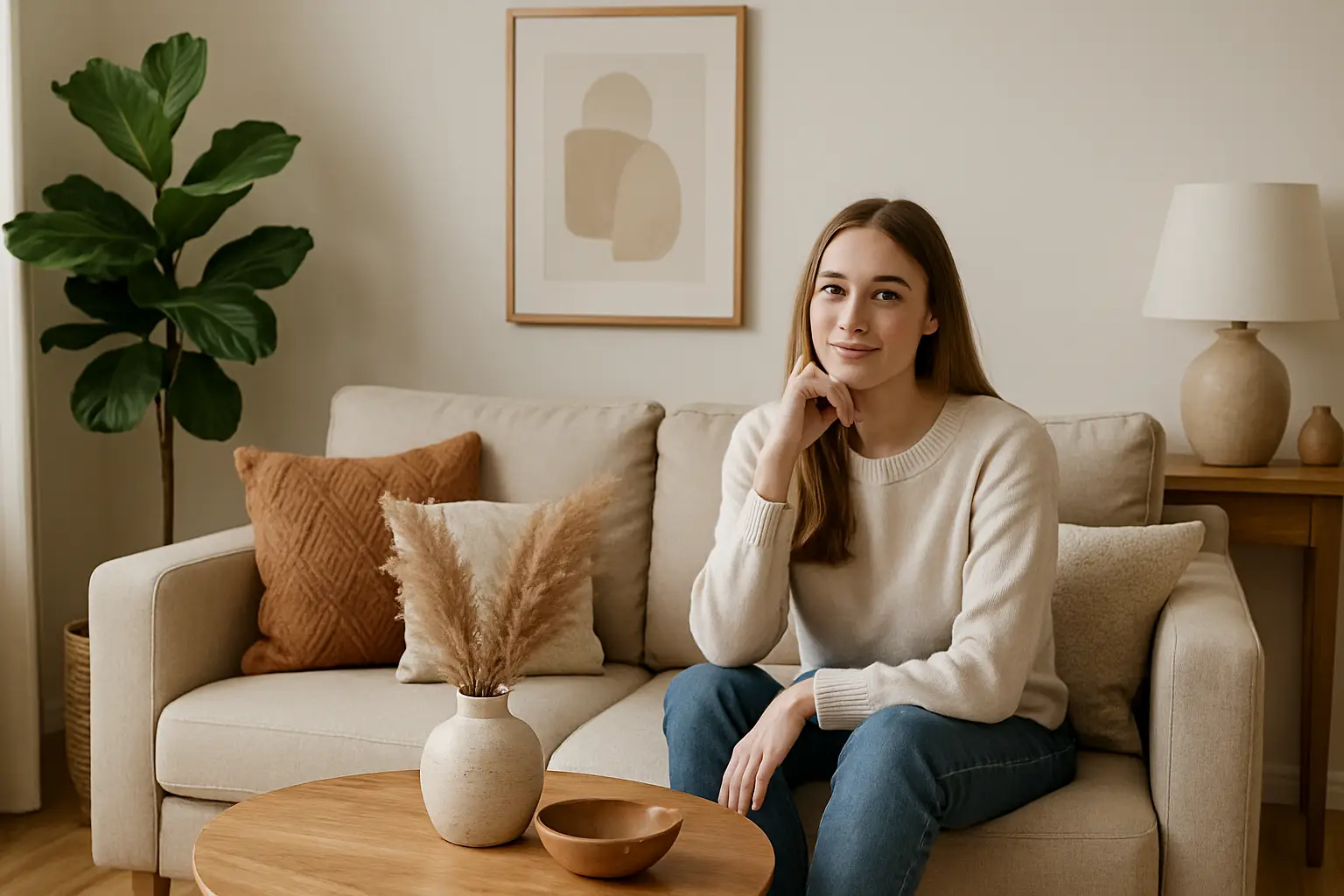
You know the moment: you walk into your living room with a cup of coffee and everything is… fine. Clean. Functional. But it doesn’t quite feel finished, and it definitely doesn’t feel like a space you’d photograph on purpose.
That gap between “fine” and “I love being here” is exactly where interior decoration does its best work. Decoration isn’t about buying a cart full of trendy objects. It’s the skill of shaping mood, comfort, and personality using the surfaces and finishing layers you interact with every day – color, lighting, textiles, art, and styling.
What interior decoration actually changes
Interior decoration is often treated like the last step, but it quietly drives how a room functions. The right window treatment affects glare on your TV and how well you sleep. The right rug controls noise, adds traction, and makes a seating area feel intentional. Even something as “visual” as artwork changes whether a hallway feels like a pass-through or a place with presence.
The trick is to decorate with a plan. Otherwise you end up with a room that’s technically nice, but visually scattered – or worse, a room full of great items that never quite work together.
Start with a clear direction (not a strict theme)
Most people get stuck because they’re trying to decide on a style label. You don’t need to pledge loyalty to “modern farmhouse” or “coastal” to decorate well. You do need a direction that keeps decisions consistent.
A practical way to find it is to choose three words you want your home to feel like. Think “calm, warm, tailored” or “bright, playful, collected.” Those words become your filter. If a decor piece doesn’t support at least one of them, it’s probably a distraction.
If you like mixing styles, that’s completely workable. The trade-off is you’ll need stronger consistency in at least one other area, usually color or material. A room can mix mid-century lines with vintage finds, for example, as long as the palette stays cohesive and the finishes don’t fight each other.
Build a color plan you can actually live with
Color is where interior decoration gets emotional fast – and expensive fast if you keep repainting.
Instead of picking a paint color first, start by choosing your “anchoring” items: the rug, sofa, bedding, or major curtains. Those pieces take up the most visual space and are harder to swap. Once those are set, paint becomes the supporting actor that ties everything together.
For most homes, a simple structure works best:
- A base of 1-2 neutrals (walls, large upholstery, major case goods)
- A mid-tone that shows up repeatedly (wood tone, leather, a muted color)
- One accent color used in small doses (pillows, art, accessories)
Neutrals don’t have to mean cold white. Cream, greige, warm taupe, soft clay, and even smoky green-gray can all read neutral depending on what they’re paired with. The main “it depends” factor is your light. North-facing rooms often need warmer paint to avoid feeling flat, while south-facing rooms can handle cooler tones without looking icy.
Layer lighting like you mean it
If you only upgrade one thing for better interior decoration, make it lighting. Not just bulbs – layers.
A well-decorated room typically uses three types:
- Ambient lighting for overall brightness (ceiling fixture, recessed lights)
- Task lighting for work (reading lamp, under-cabinet lighting, desk light)
- Accent lighting for mood and depth (picture light, sconces, a small lamp on a shelf)
The goal is control. You want options for “Saturday morning clean” and “Tuesday night unwind” without rearranging furniture.
Bulb temperature matters too. Many homes look harsh because bulbs are too cool. In living rooms and bedrooms, warm white (often in the 2700K range) tends to feel more flattering and restful. Kitchens and bathrooms can handle slightly cooler light if you need clarity, but going too blue can make finishes look sterile.
Choose textiles that add comfort and structure
Textiles are where a room becomes livable. They also fix a lot of visual problems quickly.
Rugs define zones. Curtains add height and softness. Pillows and throws bring in color without commitment. And bedding is basically the “largest canvas” in a bedroom.
A few reliable moves:
Hang curtains higher than you think. Mounting rods closer to the ceiling (instead of right on top of the window frame) makes the room feel taller. Wider panels also make windows look larger when open.
Use rug size to correct proportion. A too-small rug makes furniture look like it’s floating awkwardly. In living rooms, it’s usually better when at least the front legs of the sofa and chairs sit on the rug.
Mix textures, not just patterns. If everything is smooth (leather sofa, flat-weave rug, sleek table), the room can feel a little cold. Add a chunky knit, a nubby pillow, or a boucle accent chair to bring warmth.
Decorate with “big anchors” before small objects
A common interior decoration mistake is buying lots of small decor pieces before the room has its big visual anchors. You end up styling a space that still lacks structure.
Anchors include:
- One substantial piece of wall art (or a well-planned gallery wall)
- A mirror that reflects light and adds scale
- A statement light fixture
- A coffee table or dining centerpiece that fits the room’s proportions
Once those are in place, the smaller items – candles, vases, books, bowls – have something to relate to. They stop feeling like clutter and start feeling curated.
Make art placement feel intentional (even on a budget)
Art is often the line between “decorated” and “designed.” But it only works when it’s scaled and placed correctly.
If you’re hanging a piece above a sofa or console, aim for it to feel connected, not hovering. Too high is the most common issue, and it makes rooms feel disjointed. The same goes for gallery walls: they look best when treated as one composition, not scattered frames.
Budget-friendly art can still look elevated when you upgrade the frame, keep a consistent mat color, or choose a cohesive palette across multiple prints. If your style is more collected, mixing frames is fine – just repeat a finish or two so it doesn’t look random.
Style shelves and surfaces with restraint
Styling is where personality shows up, but it’s also where “too much” happens quickly.
A helpful rule is to give each surface a job. A coffee table might be for conversation and ease, so you keep it simple: a tray, one stack of books, and something organic like a branch or bowl. A console by the door might need function first: a catchall, a lamp, and one personal detail.
Negative space is not emptiness. It’s what makes your favorite objects stand out. If you love maximal decor, you can still use this idea – just concentrate items in intentional clusters and leave breathing room around the clusters.
Work room by room, but keep the whole home in mind
You don’t need to decorate your entire home at once. Most people do better with a phased approach.
Start with the room you use most, usually the living room or bedroom. Get that space feeling right, then let it inform the next room’s palette and materials. This is how homes end up cohesive without being matchy.
The trade-off is that transitions matter. If one room is ultra modern and the next is rustic farmhouse, the hallway between them can feel jarring. Repeating one element – wall color, wood tone, metal finish, or a similar rug style – helps the whole home feel like it belongs together.
If you want help staying organized, keep a simple “home palette” note on your phone: paint colors, key fabrics, metal finishes, and the main wood tones you’re repeating. It makes shopping and decision-making faster.
Add modern help: use tech to preview before you buy
Interior decoration used to rely on imagination and painter’s tape. Now you can get a lot closer before spending money.
Try using a basic room planner, a phone-based measure tool, or an AI-powered mood board to test rug sizes, wall art scale, and color combinations. These tools aren’t perfect – they can misread lighting or scale – but they’re great for preventing the biggest mistakes, like choosing an undersized rug or a too-tiny chandelier.
For more idea-rich planning across rooms, styles, and seasonal updates, Home Design United keeps practical guides and trend-driven inspiration in one place so you can move from “I like that” to “I can do that.”
The details that make it feel like home
The final layer of interior decoration isn’t something you buy in a rush. It’s the personal proof that real people live here.
A framed photo that’s not hidden on your phone. A ceramic bowl you actually use. A vintage piece with a story. A kids’ drawing in a clean frame. A stack of cookbooks that says what you like to make, not what you think you should cook.
If you’re deciding between “perfect” and “personal,” choose personal – then edit for cohesion with color, scale, and placement. That’s how homes feel elevated without feeling staged.
Choose one room this week and pick one upgrade that changes how it feels at night: a warmer bulb, a properly sized rug, curtains hung higher, or a piece of art with real scale. When the room starts supporting your life instead of just holding your stuff, decorating stops feeling like shopping and starts feeling like momentum.