







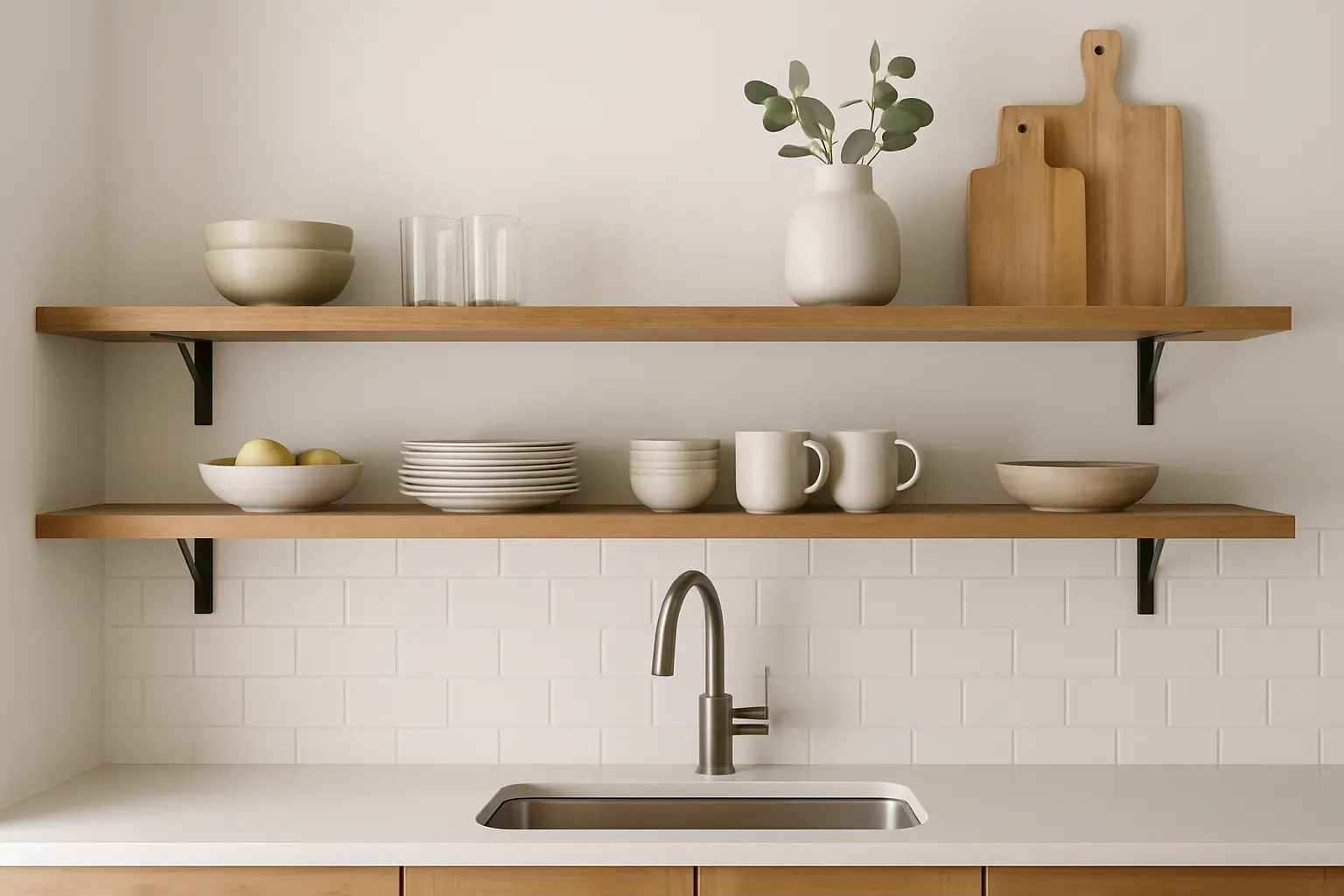
You fall in love with open shelves in a photo because they look calm and curated – then you picture your own cabinet chaos and wonder if it would feel exposed, dusty, and stressful. That tension is exactly why open shelving is one of the most debated kitchen choices. It can make a kitchen feel lighter and more personal, or it can turn your everyday clutter into the room’s main feature.
This guide breaks down the real open shelving kitchen pros cons, plus the practical “it depends” factors that matter in day-to-day life: how you cook, how often you clean, how much storage you actually need, and whether you want a styled look or a purely functional one.
Open shelving kitchen pros cons: what you gain and what you give up
Open shelving is simple: instead of upper cabinets with doors, you store and display items on open shelves. That one change affects how your kitchen feels and how it functions.
The biggest upside is visual space. Removing a row of boxy uppers can make a small or medium kitchen feel taller, brighter, and more breathable. It also adds personality fast – your dishes, glassware, cookbooks, and even a few everyday objects become part of the decor.
The trade-off is that open storage asks more of you. It wants you to edit, maintain, and keep things looking intentional. If your kitchen is a high-traffic command center with constant snacks, school lunches, and “put it wherever” energy, you’ll feel that pressure more.
The pros: why open shelves are so appealing
They visually open up the room
Upper cabinets create a strong horizontal line. In a tight kitchen, that can feel heavy. Open shelves reduce that visual weight and can make the wall feel farther away. If your kitchen gets limited natural light, open shelving can also help light bounce around the room instead of being absorbed by a wall of doors.
This is one of the most meaningful open shelving kitchen pros cons factors because it affects how the space feels every single day – especially in apartments, galley kitchens, and older homes with smaller footprints.
They can be budget-friendly in the right remodel
If you’re renovating and your cabinet quote makes your eyes water, open shelves can lower the cost of uppers. The savings are most noticeable when you’re replacing a long run of wall cabinets with a few shelves and keeping the base cabinets for concealed storage.
That said, shelves are not automatically “cheap.” Custom shelves in solid wood, specialty brackets, concealed mounting systems, or stone shelves can add up. The budget win is real, but only if you choose materials that match your overall plan.
Everyday access is faster
If you cook a lot, there’s a simple satisfaction in reaching for plates or your favorite skillet without opening and closing doors. Open shelves can make your daily workflow feel more efficient – especially when you place them near the dishwasher for easy unloading.
This is also a smart move for renters or DIY upgraders who want the kitchen to feel more functional without a full overhaul.
They help you create a “designed” look quickly
Open shelves do what decor does best: they add layers. Even a basic kitchen can feel intentional when you mix practical items with a few warm touches like a cutting board, a small piece of art, or a plant.
If you love seasonal styling, open shelving is a built-in stage. You can shift a few items for fall, the holidays, or spring without changing anything permanent.
The cons: the part photos don’t show
Dust, grease, and kitchen film are real
Kitchens aren’t like living rooms. Cooking creates airborne grease, steam, and fine particles that settle onto surfaces. If you fry often, cook with a lot of oil, or don’t run your range hood consistently, open shelves will need more frequent wipe-downs.
The items on those shelves can also collect film, especially glassware. If you love the look of open shelves but hate the idea of washing a mug you haven’t used in a week, that’s a big signal.
Visual clutter can build fast
Open shelving only looks “clean” when what’s on it is coordinated and not overfilled. Real kitchens have mismatched kid cups, takeout containers, odd appliances, and the random water bottle that never leaves the counter. Without doors, there’s no place to hide the messy middle.
If your household tends to keep a lot of extras – backup pantry items, small appliances, bulk snacks – open shelving can push that clutter onto counters, which makes the whole kitchen feel busier.
Less protected storage (and more breakage risk)
Cabinet doors protect dishes from dust and from the accidental bump of a backpack or a swinging tote bag. Open shelving puts everything within reach, which can be great – or risky in a home with kids, pets, or tight walkways.
If you’re installing shelves near a doorway or in a narrow galley, think through traffic patterns. A beautiful stack of plates is not worth daily stress.
It can feel like a constant styling project
Some people find open shelving motivating – it encourages them to keep the kitchen tidy. Others feel like the kitchen is never “done.” If you already struggle with visual noise, open shelves may amplify it.
A good design decision supports your life. If you want a kitchen that forgives a busy week, you may prefer mostly closed storage with just a small open moment.
What makes open shelving work (or fail) in real homes
Your cooking style matters more than your design style
If you cook simple meals, use the microwave often, or don’t produce much grease, open shelves are easier to maintain. If you cook daily with high heat, sear, fry, or use lots of spices and oils, you’ll want to be more selective.
A strong range hood helps, but so does shelf placement. Shelves right next to the stove will get dirtier faster than shelves on a different wall.
Your dish habits matter, too
Open shelving is easiest when you use your items frequently. Plates, bowls, everyday glasses, and a small set of mugs are ideal because they rotate often and don’t sit long enough to collect dust.
It gets harder when shelves become long-term storage for “nice” dishes or rarely used serving pieces. Those items look great, but they’ll need a rinse before use – and you’ll probably be cleaning around them more.
The best open shelves are edited on purpose
A shelf that’s packed edge-to-edge reads as clutter. A shelf that’s too sparse can look staged in an unlivable way. The sweet spot is a functional arrangement that still has breathing room.
As a rule of thumb, open shelves work best when you limit them to the items you want to see every day, and you keep duplicates somewhere else. That “somewhere else” can be lower cabinets, a pantry, or a nearby hutch.
Smart compromises if you love the look but want less maintenance
You don’t have to choose between a full wall of open shelving and fully enclosed cabinets. The most livable kitchens often mix both.
Do a partial swap, not a full replacement
Replacing one section of uppers – like the area around a window, the coffee station wall, or a short run near the sink – gives you the airy effect without sacrificing all hidden storage. You get a focal point and a styling opportunity, and the rest of your kitchen can stay hardworking and closed.
Use open shelves for categories that behave
Some items naturally look better and stay cleaner. Everyday white dishes, clear glassware, and simple canisters tend to read calm. On the other hand, plastic food containers, mismatched travel cups, and piles of snack bowls tend to look messy quickly.
If you want the open shelf look with less effort, keep the shelves “quiet” with consistent colors and repeat shapes.
Consider shallow shelves and fewer rows
Deep shelves invite clutter because you can stack items front to back. Slightly shallower shelves reduce that temptation and keep items easy to grab. Also, two well-placed shelves often look better than three cramped ones.
Try glass-front uppers as a middle ground
If your priority is a lighter look but you want dust protection, glass-front cabinets are a strong compromise. They still encourage editing and styling, but they forgive a little more and reduce cleaning.
Design tips that make open shelving feel intentional
The goal is a kitchen that feels both personal and usable – not a showroom you have to maintain.
Start by matching the shelves to your kitchen’s “anchor” finishes. If you have warm wood floors, wood shelves can echo that warmth. If your kitchen is crisp and modern, painted shelves or simple slab shelves can feel cleaner.
Bracket style matters. Visible brackets can add character (modern, industrial, or farmhouse depending on shape), while hidden supports feel more minimal. Pick one direction and stick to it.
Lighting helps more than people expect. Under-shelf lighting or nearby task lighting can make shelves feel like a feature rather than an afterthought, and it makes the kitchen easier to use at night.
If you want extra confidence before you commit, mapping out shelf length, height, and what will actually live there in a simple room plan can prevent the most common mistake: installing shelves that look great empty but don’t fit real dishes. Home Design United shares planning-first design guidance like this at https://homedesignunited.com/.
Who open shelving is best for (and who should skip it)
Open shelving tends to be a win for homeowners and renters who enjoy a tidy, curated look, use a consistent set of everyday dishes, and don’t mind a quick weekly wipe-down. It’s also great when your kitchen feels visually tight and you want an instant “lighter” upgrade.
It’s more challenging for households that need maximum concealed storage, cook messy meals often without strong ventilation, or have lots of mismatched items they don’t want on display. If you want your kitchen to feel calm even when life is chaotic, you’ll probably be happier with mostly closed cabinetry and just a small open section.
A good kitchen isn’t the one that looks perfect online – it’s the one that supports your routines and makes you feel at home every time you walk in. Choose the version of open shelving that fits your real life, not your aspirational one, and you’ll enjoy the look without resenting the upkeep.