








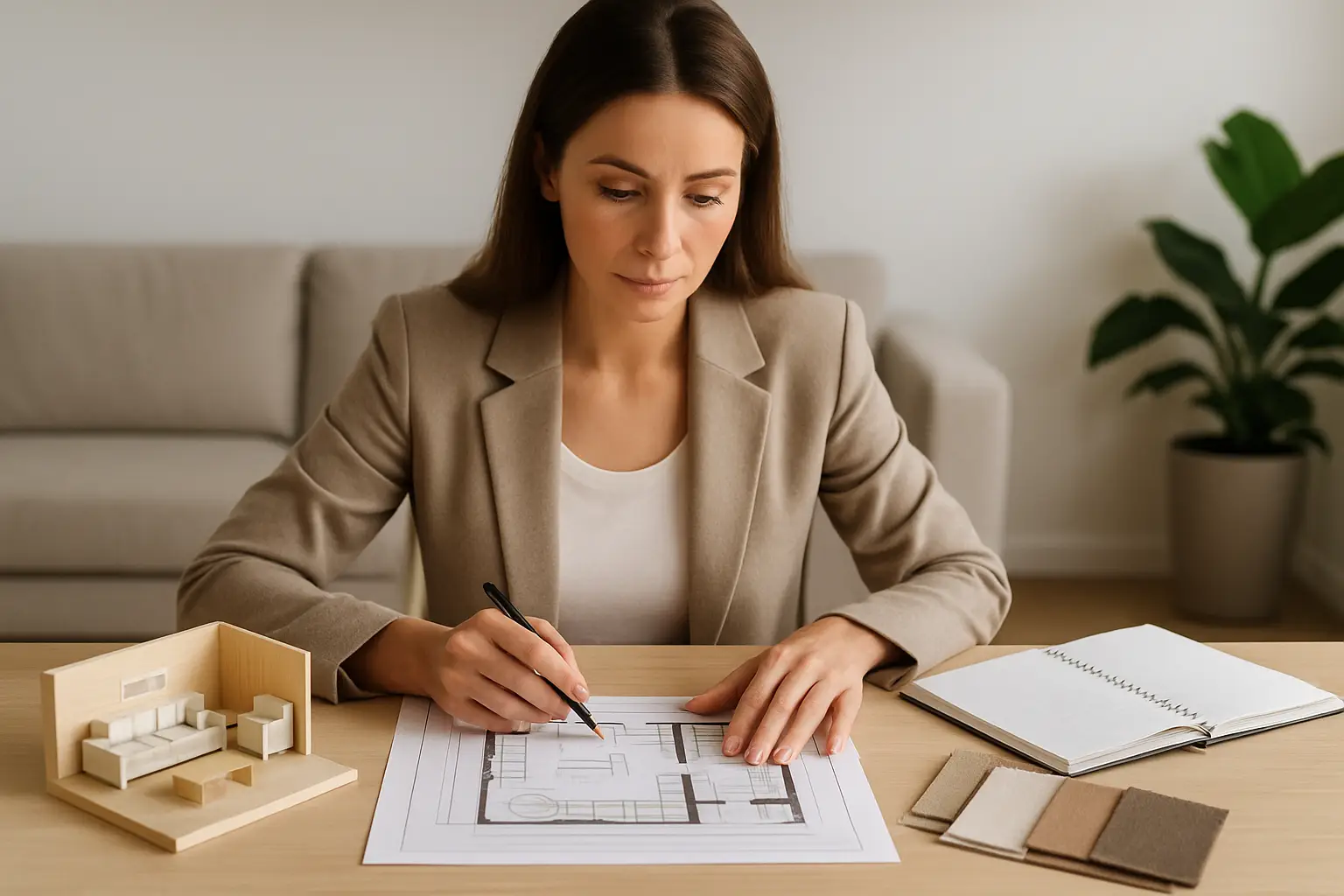
If your room feels “off” even after you’ve cleaned, decluttered, and bought the right-looking pieces, it’s usually not your style. It’s the layout. A sofa that’s two inches too deep for the walkway, a rug that floats like an island, or a TV that forces everyone to crane their neck can make a perfectly nice space feel cramped and awkward.
The good news: learning how to plan a room layout is less about having an interior designer’s eye and more about making a few smart decisions in the right order. Once you plan for real life – walking paths, sight lines, conversation, storage, and light – the room gets easier to furnish, easier to keep tidy, and more comfortable to live in. Understanding How to Plan a Room Layout That Works is key to achieving a harmonious space.
Start with the room’s “non-negotiables”
Before you think about furniture, identify what you cannot change. These fixed elements are the boundaries your layout needs to respect.
Walk the room and note doors (including which way they swing), windows, vents, radiators, built-ins, fireplaces, and any awkward bumps or soffits. Then consider the “soft” non-negotiables: the outlet your TV has to use, the corner your kid’s reading nook must occupy, or the space you need to keep clear for a dog crate.
This step prevents the most common layout mistake: designing a beautiful arrangement that blocks the front closet, covers an HVAC return, or forces you to run extension cords across a walkway.
Measure, then sketch – even if you’re not “a drawing person”
You don’t need perfect drafting skills, but you do need accurate numbers. Measure the room length and width, plus the placement and widths of doors and windows. If you have open-concept zones, measure the area you want the room to occupy (for example, the living area within a great room), not the whole footprint.
A simple sketch on graph paper works well, but you can also use a basic notes app with a rough diagram. If you prefer a tech-forward workflow, a free room planning tool or beginner-friendly 3D app can speed up trial-and-error, especially when you’re debating a sectional vs. sofa-and-chairs.
The key is to create a “container” so you’re not guessing. When you plan with measurements, you stop buying furniture that’s slightly too big and start making choices that feel effortless once they’re in the room.
Define what the room needs to do (not just how you want it to look)
Style matters, but function is what makes a layout feel right day after day. Ask yourself how the room is actually used.
Is it a living room where you watch movies nightly, or a “front room” that mostly hosts guests? Is your dining space where kids do homework and you work from home sometimes? Is this bedroom strictly for sleep, or does it need a vanity, a treadmill, or a mini nursery corner?
Write down the top two or three activities the room must support. Those activities drive your “anchor” decisions: where seating faces, how much surface area you need, and what kind of circulation space is required.
Plan your layout around an anchor and a focal point
Most rooms need an anchor piece – usually the largest item that defines the main zone. In a living room, it’s typically the sofa or sectional. In a bedroom, it’s the bed. In a dining room, it’s the table.
Then decide the focal point: the place the room visually organizes around. Sometimes it’s built in (a fireplace or a big window). Sometimes you create it (a media console wall, art, or a statement light).
Here’s the trade-off: if your natural focal point is a window but your household watches TV constantly, you’ll need to choose what wins. You can often compromise by putting the TV on a swivel mount, using blackout curtains for glare, or creating a seating arrangement that supports both conversation and viewing.
Once you know the anchor and focal point, the rest of the layout gets simpler because you’re no longer placing pieces randomly.
Get traffic flow right first (it’s the difference between “nice” and livable)
Traffic flow is the invisible skeleton of a good room. You want clear, natural paths that don’t cut through the middle of your main seating or force people to sidestep around furniture.
As a rule of thumb, keep main walkways around 36 inches when you can. In tighter rooms, 30 inches can work, but you’ll feel it if multiple people pass each other often. Around dining tables, you typically want enough space to pull out chairs comfortably; if you’re tight on space, choose slimmer chairs or a smaller table rather than squeezing the path.
A quick, practical test: stand in each doorway and walk to the other side of the room like you would in real life. If you’re constantly dodging a coffee table corner or clipping a chair, the layout needs a rethink before you buy anything else.
Choose the right furniture scale (and don’t let one oversized piece dominate)
Many layout issues aren’t about placement – they’re about scale. A deep, bulky sofa can swallow a narrow living room. Oversized nightstands can make a bedroom feel like a maze. A dining table that’s just a few inches too wide can turn mealtimes into a shuffle.
When you’re shopping, look at dimensions first and aesthetics second. Depth is the silent troublemaker: a sofa that’s 40 inches deep may feel luxurious, but it eats circulation space fast. If your room is modest, a slightly shallower sofa and a pair of comfortable chairs can feel more open than a sectional that barely fits.
This is also where flexibility helps. If you rearrange often, consider lighter visual profiles (legs instead of skirted bases), armless accent chairs, and nesting tables.
Use a “zone” mindset for open-concept and multifunction rooms
If your space does more than one job, your layout should make that feel intentional. Rather than scattering furniture, create zones that each have a clear purpose.
A rug is the easiest zone-maker in a living area. It tells the eye, “This is the conversation space,” even when the room opens into a kitchen. Lighting can do the same thing: a pendant over a dining table, a floor lamp by a reading chair, or under-cabinet lighting that visually separates prep space from lounge space.
Just remember the trade-off: more zones mean more edges and transitions, which can look busy. Keep the palette cohesive and repeat materials (wood tone, metal finish, fabric texture) so the room feels connected even when it’s multitasking.
Place rugs and lighting like they’re part of the layout (because they are)
A rug that’s too small makes furniture look like it’s hovering, and it can shrink the room visually. In living spaces, you usually want at least the front legs of your sofa and chairs on the rug. In bedrooms, a large rug that extends beyond the sides of the bed makes mornings feel warmer and the room feel more finished.
Lighting affects layout more than most people expect. If the only overhead light is in the center of the ceiling, but your seating ends up in the corner, the room will feel dim and slightly wrong. Plan for layered lighting: overhead for general light, task lighting where you read or work, and softer accent lighting to make the room feel inviting at night.
Test your plan before you commit
The fastest way to build confidence is to “audition” the layout.
If you’re working with existing furniture, use painter’s tape to mark the footprint of major pieces on the floor, or temporarily shift items to simulate the plan. If you’re buying new furniture, cut paper templates to scale or use a simple digital planner to check clearances.
Pay attention to the lived-in details: Can you open drawers fully? Does the dishwasher or fridge door swing into the dining area? Can someone carry laundry through without bumping into a console? Small frictions add up, and a smart plan removes them.
If you want more room-by-room planning ideas and tool-based workflows, Home Design United is a helpful hub to keep in your back pocket.
Common layout mistakes that quietly ruin a room
Some problems show up again and again, even in beautifully decorated homes.
One is pushing all furniture against the walls. In small rooms, it seems logical, but it often creates a big empty center and awkward conversation distances. Pulling seating in even a few inches can make the room feel more intentional.
Another is ignoring sight lines. If your first view from the doorway is the back of a tall chair or a cluttered corner, the room won’t feel welcoming. Aim for a clear, calm view into the space, with taller pieces placed thoughtfully rather than randomly.
The last is treating storage as an afterthought. If your layout doesn’t include a landing spot for remotes, bags, toys, or mail, clutter will win. A slim console, a storage ottoman, or closed cabinetry can keep the room feeling elevated without making it feel precious.
A closing thought to guide every decision
When you’re stuck, stop asking, “Where does this furniture go?” and start asking, “How do I want this room to feel at 7 p.m. on a Tuesday?” If the plan supports that moment – comfortable seating, easy movement, good light, and a place for the everyday mess – your layout will look better, too.